

Do you ever stop to think about how purpose is truly the backbone of your customers' business? How much do we really know about what drives them at their core, and what sits at the heart of the companies they serve?
This is our last blog of 2019, and as I sit and think about the year gone by, it is impossible not to reflect on my personal and professional purpose. The question I keep returning to: Am I able to live out my personal purpose through my profession? This time of year invites many of us to be with family and friends, to reset for the coming year, and to recharge before the calendar turns.
That reflection hit me a few weeks ago during a drive to a client meeting. I realized partway there that I had left my glasses at home. Ten years ago, that wouldn't have been a problem. Today, I needed a fix fast. I pulled over, ran into the nearest store, grabbed a pair of reading glasses off the rack, and made it to my training session on time.
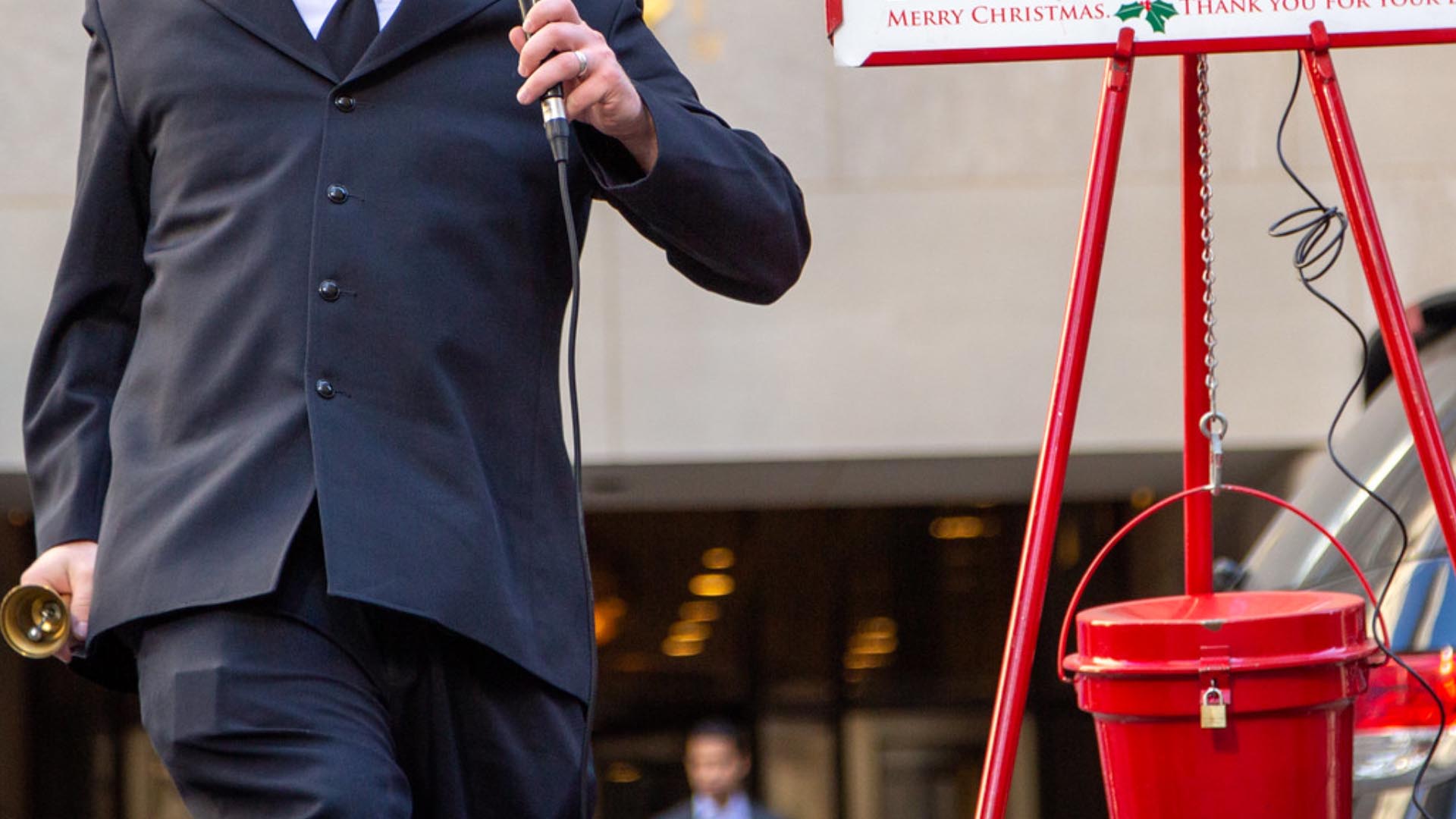
As I was leaving the store, I walked right past a Salvation Army Red Kettle. I kept moving, like most people do. I didn't stop. I didn't even slow down. My agenda had me pointed in another direction, and I just ran on by without giving it a second thought. That moment stuck with me in a way I didn't expect.
The Question Leaders Rarely Stop to Answer
How often do we actually stop and think about the purpose behind the things we walk past every day? The Red Kettle has been outside stores since I was a little boy. I've seen hundreds of them. And yet, until that morning when I sat down to write this blog, I had never once stopped to ask: what is the real purpose of the Red Kettle?
That question matters more than it might seem. Because the same blind spot that keeps us from pausing at a kettle is the one that keeps leaders from pausing to understand the purpose behind their people's work, behind their customers' decisions, and behind the organizations they lead.
So I went to Google. And what I found changed the way I thought about purpose-driven leadership entirely.
One Man, One Pot, One Purpose
In 1891, Salvation Army Captain Joseph McFee was troubled. So many poor individuals in San Francisco were going hungry during the holiday season that he resolved to provide a free Christmas dinner for the destitute and poverty-stricken. He had one major hurdle: funding the project.
McFee laid awake at night worrying about how to find the money to feed thousands of the city's poorest people on Christmas Day. Drawing on a memory from his past, he placed a large pot near the Oakland Ferry Landing with a simple sign on it: "Keep the Pot Boiling." His passion, fueled by a clear and unwavering purpose, took off from there.
Within six years, the kettle idea had spread from the West Coast to the East Coast. By 1901, kettle contributions in New York City funded the first mammoth sit-down dinner at Madison Square Garden. Today, the Salvation Army assists more than 4.5 million people during the holiday season, and the tradition has spread from the United States to Korea, Japan, Chile, and across Europe.
One man saw a need. He problem-solved. He stayed focused on purpose. And the result is a sustainable cause that has been operating for over 130 years.
What Purpose-Driven Leaders Actually Do Differently
Captain McFee didn't have a budget, a team, or a strategy document. He had a clear sense of why he was doing what he was doing, and that clarity gave him the patience to find a way. That is what purpose does for a leader. It provides the "why" that holds steady when the "how" is still unclear.
Purpose-driven leaders ask different questions than their peers. They don't just ask "how do we hit the number?" They also ask "what problem are we solving for the people we serve?" They don't only manage toward metrics. They also develop the people beneath them toward meaning.
In coaching work, we see this difference play out in real time. Leaders who lead with purpose tend to build stronger trust with their teams, because trust is built when people believe their leader cares about something beyond their own success. Purpose communicates that. It is hard to fake.
When Pressure Pushes You Toward Profit Over Purpose
Here is something I've observed in nearly every organization I've worked with: when stress rises in business, the pressure tends to force leaders into a pure profit mindset, often at the expense of purpose. It is a predictable pattern. Quarter-end pressure builds. Deals stall. Forecasts slip. And suddenly, the coaching conversations that were supposed to happen on Tuesdays get replaced by pipeline reviews.
I've seen this happen at the individual level, at the team level, and at the organizational level. And when it becomes sustained, it can quietly destroy a great culture. The irony, of course, is that we know from both the research and from direct experience that leaders and companies who learn to anchor back to purpose in the middle of pressure ultimately deliver better results on the profit side. Serving with purpose is not a trade-off against performance. It is what sustains performance.
The Red Kettle is proof of that. McFee didn't start with a revenue model. He started with a problem worth solving. And 130 years later, the Salvation Army is still feeding people because that original purpose never got traded away for a shorter-term gain.
Braintrust's Purpose: Serving and Solving
At Braintrust, we recently had a team conversation about our own purpose. It has always been to help people operate from their place of purpose: to help them move from a "sales" mindset to a mindset of serving by solving problems for their customers, which ultimately drives revenue and profit. That framing matters. When you lead with service and solution, profit follows. When you lead with profit alone, both purpose and performance tend to erode.
It is so important to pause and reset on purpose, especially at the end of a year. Think about what you're here to do. Think about who you are here to serve. That clarity becomes the anchor that holds you steady when the pressure of the next year builds.
What Will Your Red Kettle Be?
As we reflect on the year that has been and look ahead to the year to come, my hope is that you'll take some time to think about your purpose at three levels: individual, organizational, and customer. What drives you personally? What is your organization fundamentally here to do? And what is the core problem your customers are counting on you to solve?
What I love about the Red Kettle is that when you see it, you don't actually think about the Salvation Army. You think about the purpose of serving those less fortunate. The organization disappears into the mission. That is the goal of every leader who has gotten purpose right.
You are a big part of our Red Kettle. To everyone we've had the opportunity to serve in 2019, thank you. To those we hope to serve in the future, we look forward to that connection. To all of you who read our blogs or listened to our podcasts, we are committed to helping you and your business think deeper, drive change, and grow with purpose.
As we close out the year, we have a simple request. Between now and the end of the year, stop by a Red Kettle, make a contribution, and recognize that you are doing a small part to fulfill a purpose and help someone less fortunate. It takes thirty seconds. And it is a reminder that purpose, no matter how small the act, compounds over time into something far greater than any single moment.
Coaches Corner: Five Questions Heading into the New Year
For those of you leading teams and coaching individuals, I want to leave you with five questions to sit with heading into 2020. These are not complicated. But they are easy to skip. My challenge to you: carve out thirty minutes before the new year and write down your honest answers.
- Do you understand your own purpose?
- Do you understand the purpose of your individual team members?
- Do you actively teach the people on your team about the purpose of the organization?
- Do you understand the purpose of your customers?
- Do you genuinely believe that serving your people and your customers with purpose will lead to better profit outcomes?
These five questions are a coaching conversation in themselves. They surface what's working, what's missing, and where your team's energy is actually going. If you'd like to explore what that conversation looks like inside your organization, let's talk.
