

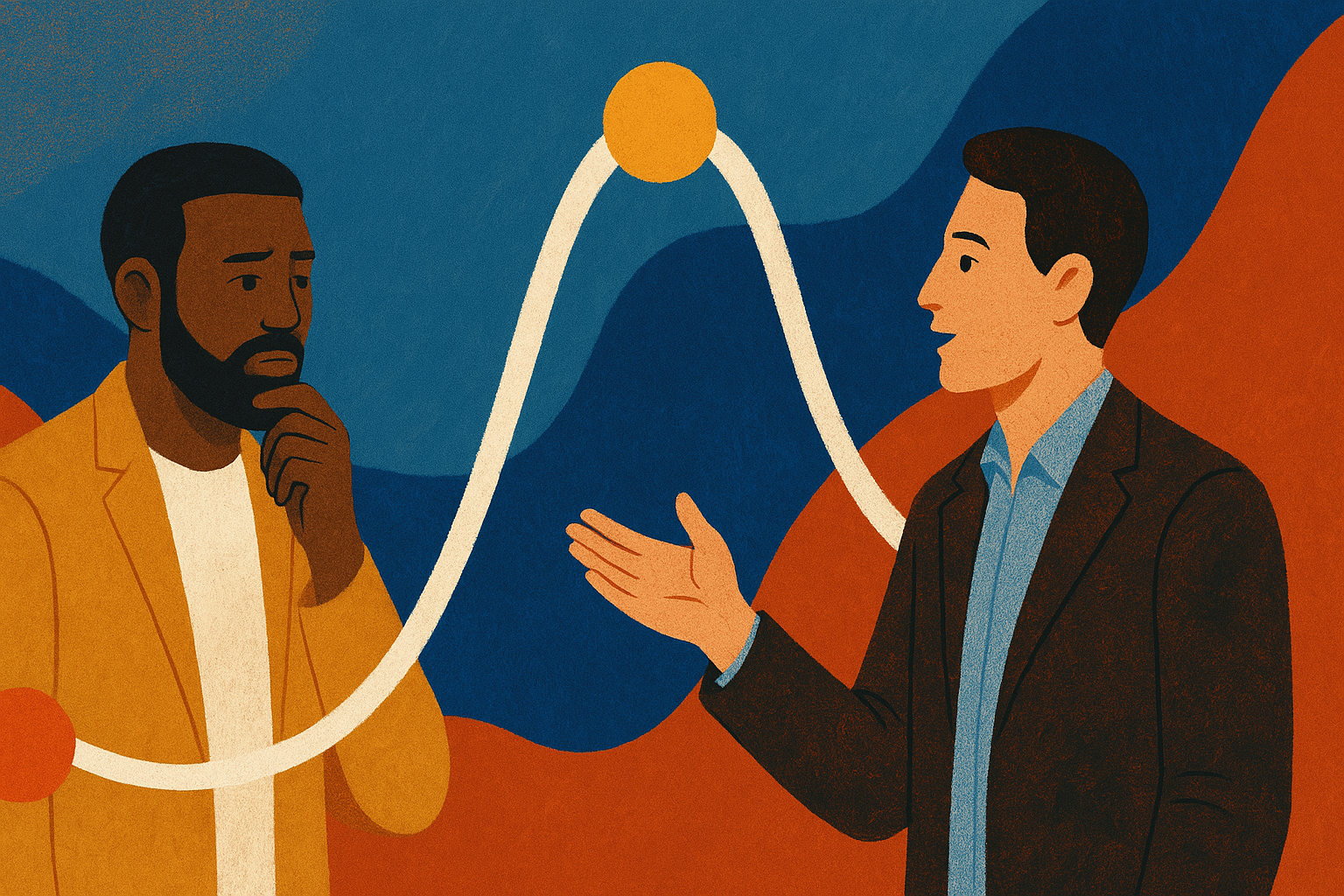
Every prospect you meet sits at a different point in their thinking. Some are hunting for a solution right now; others are still trying to name the problem. Tailoring your approach to where each buyer actually is, rather than where your pitch assumes they are, is the difference between a conversation that moves forward and one that stalls. That is what buyer personas make possible.
At Braintrust, we have seen how a solid understanding of buyer personas transforms sales teams. Here is how you can build and apply them to drive better conversations and better results.
What Are Buyer Personas?
A buyer persona is a research-based profile of your ideal customer. It maps who they are, what they care about, how they buy, and what keeps them up at night. Think of it as a composite sketch built from real customer interviews, CRM data, and behavioral patterns rather than guesswork.
The most useful personas go beyond demographics. A job title and age range will not tell you how someone makes decisions under pressure. The profiles that actually improve sales conversations include a buyer's core challenges, their goals, the metrics they are held to, and how much risk they are willing to absorb.
A software company, for example, might build separate personas for a "Technical Champion" who needs to understand integrations and a "Business Sponsor" who needs to see ROI before anything else. Both may be in the same room during the same deal, but they require entirely different conversations.
The Importance of Buyer Personas in Sales
Personas are not just a marketing asset. They shape how sales teams prepare, prospect, and communicate throughout the entire buying cycle.
With clear personas in hand, sales professionals can identify the specific pain points their solution addresses for each buyer type. They can customize their messaging before the first call, not improvise during it. They can triage their pipeline by focusing outreach on prospects whose characteristics match the personas most likely to convert.
Perhaps most importantly, personas build empathy. When a rep understands that a particular buyer type is typically under pressure from leadership to justify every vendor spend, they can lead with cost justification, not capability. That shift, from feature-listing to problem-addressing, is where trust begins.
How to Create Buyer Personas
Building accurate personas requires real inputs. The most reliable profiles come from direct interviews with existing customers, layered with data from your CRM, win/loss analysis, and your sales team's pattern recognition from the field.
Start by identifying the customers you have won and the deals you have lost. Look for patterns: which job titles appear most often in closed deals, which industries, and what challenges did your best-fit customers describe in their own words.
Once you have raw input, build profiles that include:
- Role context: title, team size, reporting structure, and who they need to get buy-in from
- Primary pain points: the challenges that affect their day-to-day and the ones that affect their career
- Goals and timelines: what they are measured against and the pressure they are under to deliver
- Communication preferences: how they like to engage and at what pace
- Decision-making style: risk tolerance, who else is involved, and what typically stalls or accelerates a decision
The final step is validation. Share draft personas with your frontline sellers and sales managers. If the profiles do not match what they hear in discovery calls, revise them. The goal is a profile that feels instantly recognizable to anyone who has spent time talking to that kind of buyer.
Tailoring Your Sales Approach by Persona
Once personas are built, the real work is using them consistently. This means adjusting how you prepare for calls, how you open conversations, how you handle objections, and how you follow up.
For a buyer persona driven by ROI, open with the business outcome before you mention the product. For a technically-minded champion, lead with specifics: integration depth, security standards, implementation timelines. For an executive short on time, make every interaction short, crisp, and focused on what they need to make a decision.
Objection handling also shifts by persona. A buyer worried about switching costs needs to hear about your implementation support and ramp time. A buyer facing internal scrutiny needs social proof from organizations like theirs. Knowing which persona is in front of you means you can address these concerns before they are raised, which is a fundamentally different posture than reacting to them mid-deal.
The same principle applies to follow-ups. An early-stage persona exploring options responds well to educational content. A persona at the evaluation stage needs case studies and concrete outcome data. Matching the follow-up to the buyer's actual stage avoids the most common sales mistake: pushing for a decision before trust is earned.
The Role of Technology in Managing Personas
CRM platforms make personas actionable at scale. When leads are tagged by persona type at the point of entry, sales reps can pull persona-specific messaging guides, call frameworks, and objection libraries before every engagement. Prep time drops; conversation quality rises.
Marketing automation tools extend this further. Persona-based nurture tracks deliver the right content at the right cadence to each buyer type, warming leads before the first call and keeping the conversation alive between meetings.
AI-powered platforms take another step by analyzing patterns across thousands of buyer interactions to refine persona assumptions over time. A persona built from 50 interviews in 2023 may need significant updates by 2025 if buyer priorities have shifted. Systems that surface these patterns keep your profiles current without requiring a full rebuild every year.
Measuring Persona Effectiveness
Personas that do not get tested do not get better. Track conversion rates by persona type, engagement levels with persona-specific messaging, and sales cycle length for each profile. If one persona type consistently takes 40 days longer to close, that is a signal that either the messaging is not resonating or the persona itself is too broad.
Qualitative feedback from your sales team is equally valuable. Reps who are using the personas daily will notice when a profile no longer matches what they are hearing in the field. A quarterly review process that incorporates their observations keeps the personas sharp, and it gives your frontline team a sense of ownership over the tools they are expected to use.
The Braintrust Approach
At Braintrust, we have seen how the gap between a generic pitch and a persona-informed conversation shows up in win rates, deal velocity, and customer relationships that actually hold. Our NeuroSelling methodology is built on the same principle: that buyers decide based on whether they feel understood, not just whether the product checks boxes.
We work with sales teams to build and apply buyer personas that go beyond demographic profiles and into the behavioral and neurological drivers behind buying decisions. Understanding buyer personas is not just about knowing who your customers are. It is about understanding what drives them and using that insight to connect authentically, build trust earlier, and close deals that stick.
If your team is ready to close the gap between how you are selling and how your buyers actually decide, start a conversation with us.
