

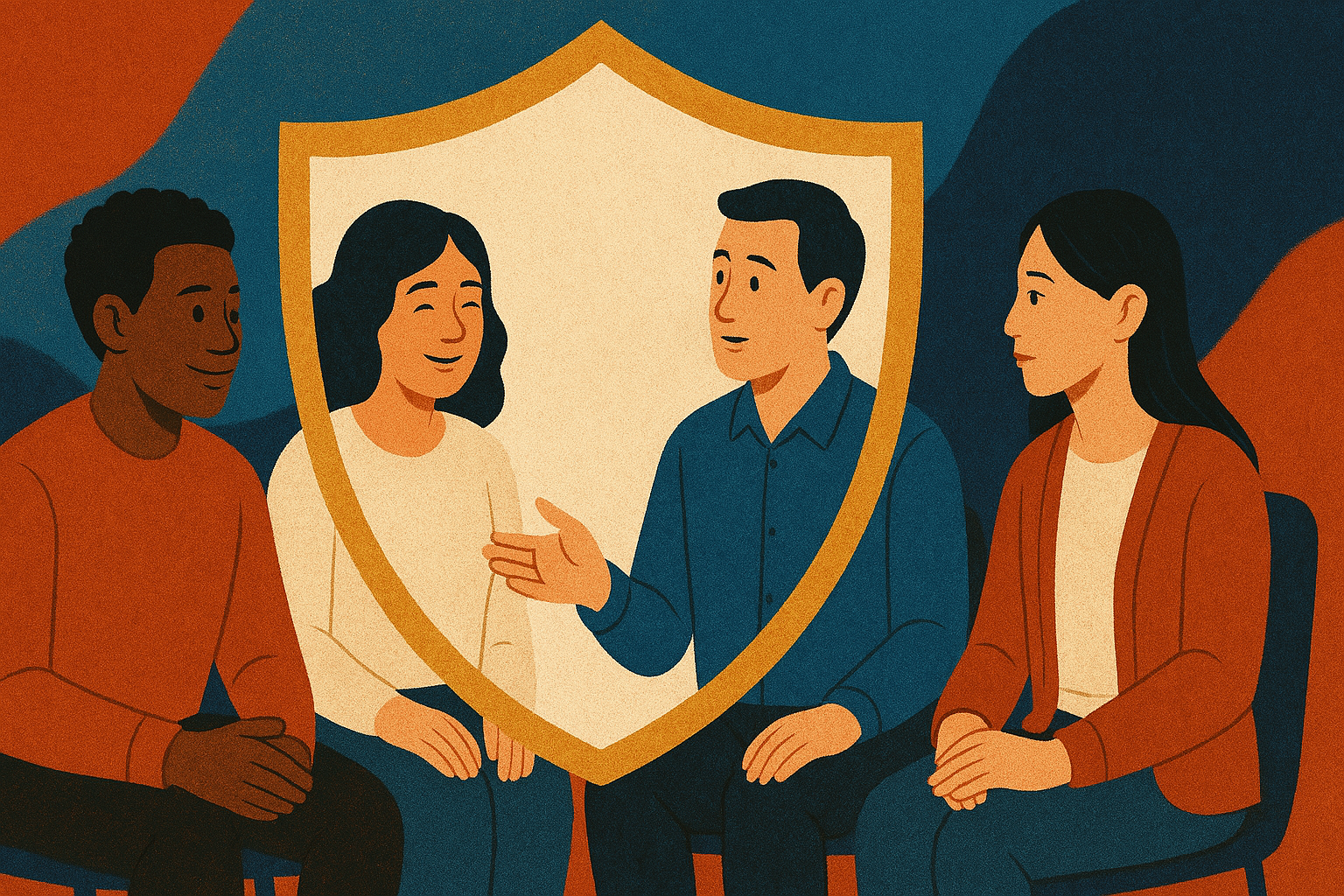
In a fast-paced world where businesses chase revenue, KPIs, and quarterly wins, there's a quieter need often left unaddressed: psychological safety. It won't show up on most performance dashboards, but it underpins everything that truly drives team success. Innovation, engagement, retention, and trust all flow from it. The term may sound academic, but it's grounded in neuroscience and vital to the health of your coaching culture. Let's explore what psychological safety actually is, why your team is craving it even if they're not saying so, and how you can build an environment where it thrives.
What Is Psychological Safety?
Coined by Harvard researcher Amy Edmondson, psychological safety refers to a shared belief that it's safe to take interpersonal risks in a group setting. That means team members feel they can speak up, admit mistakes, ask for help, share ideas, and challenge the status quo without fear of embarrassment, punishment, or rejection.
Think of it this way: psychological safety is the invisible net underneath every high-wire act your team attempts. Without it, people play small, hold back, and default to self-protection instead of contribution. They do their jobs. They just don't bring their full thinking to them.
Edmondson's original research emerged from a study of hospital teams, where she noticed that higher-performing units actually reported more errors, not fewer. The reason: those teams felt safe enough to surface problems rather than hide them. Safety wasn't making them careless. It was making them honest. And honest teams learn faster, adapt quicker, and perform at a higher ceiling.
The Brain Behind Feeling Safe
Psychological safety is not just a cultural concept. It's a neurochemical one. At the brain level, safety operates as a threat versus reward equation that plays out dozens of times a day in every meeting, conversation, and decision a person makes at work.
When people feel psychologically unsafe, their amygdala (the brain's threat detector) activates. The result is fight, flight, freeze, or silence. The prefrontal cortex, which handles creativity, decision-making, and collaboration, essentially goes offline. A team member who is in threat mode is not going to share a bold idea or admit a mistake. They are going to manage their exposure.
When people feel safe, the brain produces oxytocin and dopamine, which facilitate trust, curiosity, and connection. That neurochemical shift empowers individuals to contribute at a higher level, connect more genuinely with colleagues, and grow through the challenges the work presents.
Understanding this biology reframes what leaders are actually managing. You are not just managing performance. You are managing the neurological conditions that make performance possible. When a team is quiet, disengaged, or overly cautious, the instinct is to diagnose a skill gap or a motivation problem. It may actually be a safety problem.
Signs Your Team Lacks Psychological Safety
You don't need a formal survey to spot the absence of safety. The signals tend to be visible, if you know what to look for.
The same two or three voices dominate every meeting, while others stay quiet regardless of the topic. Mistakes get hidden or deflected rather than surfaced and learned from. Innovation stalls because people fear looking foolish or inviting critique. Feedback moves in one direction only, downward, never upward or laterally. Team members hesitate to ask for help or admit when they're in over their heads.
These patterns are often misread as individual performance issues. In most cases, they are cultural ones. The people are capable. The environment isn't giving them permission to show it.
It's also worth noting what you won't see in a low-safety culture: productive conflict, candid retrospectives, early problem escalation, or genuine peer coaching. Those behaviors require a net that isn't there.
Building Safety Starts With Leadership
Psychological safety isn't a team workshop outcome. It's a relational atmosphere, and it starts at the top. Leaders, coaches, and influential team members set the tone for what's acceptable to say, to risk, and to feel. No policy, program, or perk can substitute for a leader who consistently models safety through behavior.
The good news is that the behaviors are learnable and repeatable. They don't require a personality overhaul. They require intention and practice. Here are five of the highest-leverage behaviors leaders can build into their day.
Normalize Vulnerability as a Leadership Habit
Leadership is not about being the person in the room with all the answers. It's about being real enough that others feel safe being real too. When leaders admit they're uncertain, share a time they failed and what they learned from it, or openly ask for input on a decision, they create permission for others to do the same.
This is not about manufacturing vulnerability or oversharing. It's about being honest about the limits of your own knowledge and opening the floor for others to fill the gaps. A simple question to fold into your one-on-one conversations can go a long way: "Is there anything I could be doing differently to support you better right now?" Asked sincerely and consistently, that question sends a signal that most teams rarely hear from their leaders.
Reward Curiosity Over Certainty
High-safety cultures treat questions as contributions, not interruptions. When a team member challenges an assumption or asks "why do we do it this way?", the instinct in low-safety environments is to defend or dismiss. In high-safety environments, the instinct is to thank them for raising it.
Curiosity fuels innovation. When you reward it publicly, you reinforce the message that ideas are welcome here, even when they disrupt the norm or challenge a decision that's already been made. That shift in what gets recognized changes what people bring to work with them. Over time, you stop hearing only the safe, predictable answers and start hearing the ones that actually move things forward.
Build Feedback Loops, Not Feedback Walls
In many organizations, feedback is something that happens to people, not with them. Annual reviews, top-down critiques, scorecards without conversation. That structure creates a feedback wall: a one-way transmission that feels like judgment rather than support. People brace for it, survive it, and go back to doing what they were doing before.
Psychological safety requires feedback to become a two-way loop. Ask for feedback as often as you give it. Frame every piece of developmental input as growth-oriented rather than evaluative. And act on what you hear. People feel safe when they see their voices create change. When they don't, they stop using them, and the wall goes up a little higher.
Make Space for Emotion
Humans bring their whole selves to work, including their emotional lives. When a team member is frustrated, overwhelmed, or anxious, the impulse to fix, solve, or redirect can actually do harm. It signals that emotion is inconvenient, something to move past rather than acknowledge. The message, even when unintentional, is: check that at the door.
The more powerful move is to listen and acknowledge. Not to agree with every feeling. Not to dwell. But to say, in effect: "I hear that. You're safe to feel that here." That acknowledgment quiets the threat response at the neurological level. The thinking brain comes back online. A productive conversation becomes possible again. Acknowledgment is not weakness. It is the prerequisite for performance.
Set the Tone in Every Meeting
Psychological safety doesn't just live in your coaching philosophy. It lives in the micro-moments of every team interaction, and nowhere more visibly than in how you run your meetings. Every session is an opportunity to signal what kind of environment you're building.
Open every meeting by inviting input rather than just reporting out. Acknowledge good questions with the same energy as good answers. Leave space at the end for something like: "What's something we didn't say today that we should have?" That one question, asked consistently, has a way of surfacing what was hiding under the noise.
Pay close attention to how disagreement gets handled in the room. If someone pushes back on a plan and gets shut down, everyone registers it. If someone pushes back and gets a genuine hearing, everyone registers that too. Safety is built or eroded in those moments, one at a time.
Why It Matters More Than Ever
In hybrid and remote work environments, disconnection can become the default. Without the organic check-ins and informal moments that physical proximity allows, it's easy for individuals to feel isolated and unsure of their value to the group. Psychological safety can't be taken for granted in a distributed world. It has to be actively created.
That's why it is no longer a "nice to have." It is a foundational requirement for team performance. Teams that feel safe take more initiative, recover faster from setbacks, and bring their full creativity to the work. From a retention standpoint, people don't leave companies as often as they leave environments where they don't feel seen or valued.
The irony of psychological safety is that it doesn't make teams soft. It makes them bolder. The safest teams are the ones willing to experiment, surface conflict early, fail fast, and grow through it. If you want your team to take more ownership, lead more effectively, and coach one another toward higher performance, don't start with strategy. Start with safety. When people know they can be fully human at work, they bring the best of their thinking, their creativity, and their effort. That's not a soft outcome. That's your competitive advantage.
If you're ready to build a coaching culture where psychological safety is the foundation rather than the afterthought, let's talk about what NeuroCoaching looks like for your team.
