

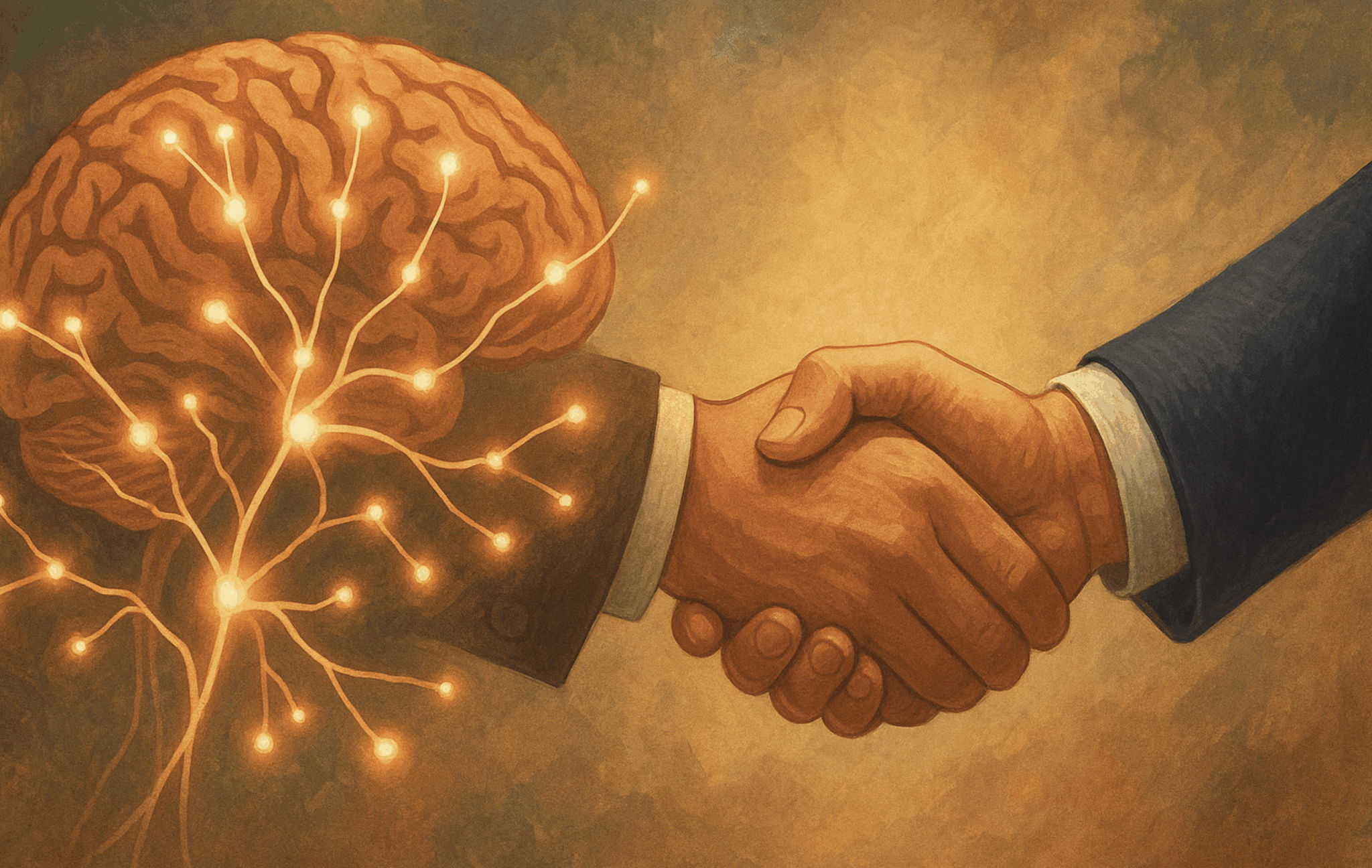
Building trust is the cornerstone of every successful sales relationship. But what happens in the buyer's brain when they decide whether to open the door to your message? By understanding the neural triggers of trust, you can design every first contact to tap into the brain's trust circuitry, boosting buyer confidence and accelerating your path to conversion.
The Neuroscience Behind Trust
Trust is not just a social nicety. It is a biological imperative. When someone perceives you as trustworthy, their brain releases neurochemicals that reinforce positive feelings and signal safety. Three mechanisms drive this response in every buyer interaction.
Oxytocin release. Often called the "trust hormone," oxytocin is released when we experience warmth, empathy, or social bonding. Higher oxytocin levels correlate with increased cooperation and a greater willingness to share sensitive information, including the budget constraints, internal pressures, and strategic priorities that sellers need to hear.
Dopamine pathways. Positive interactions trigger dopamine in the brain's reward centers, creating a feel-good loop that makes buyers more receptive to your message. When a first touch lands well, the brain marks it as worth continuing. When it doesn't, the same system flags it for avoidance.
Reduced amygdala activation. The amygdala is responsible for fear and vigilance. When trust is established, amygdala activity decreases, allowing prospects to engage more openly without defensiveness. This is why generic outreach that feels transactional triggers resistance while empathetic, specific outreach tends to open doors.
Using these neural pathways from the very first contact sets the stage for a deeper, more productive buyer-seller relationship. The biology is in your favor if you know how to work with it.
Four Neural Triggers You Can Activate
Mirror Neuron Activation Through Empathy
Mirror neurons fire both when someone acts and when they observe the same action in others. By demonstrating genuine understanding of a buyer's challenges and reflecting their language back, you activate these neurons and create an immediate sense of rapport before you've even asked for anything.
In practice: open your outreach with something like, "I've seen that many [industry peers] struggle with [specific pain point]." This signals that you understand their experience rather than just pitching at them. The brain reads it as familiarity, not solicitation.
Storytelling and the Prefrontal Cortex
The prefrontal cortex governs decision-making. Stories activate this region far more effectively than dry facts, helping buyers visualize outcomes and emotionally invest in what you're offering before they've committed to a single conversation.
A 2-3 sentence customer success narrative in your first message, one about a peer company facing a similar problem and achieving a measurable result, can be more persuasive than a full capabilities deck. The brain processes story as lived experience. Bullet points get catalogued; stories get felt.
Social Proof as Neural Safety Signals
Humans are wired to look to others for guidance, especially in unfamiliar or high-stakes situations. Showcasing well-known clients, testimonials, or recognized partnerships sends safety signals to the buyer's brain, reducing the perceived risk of engaging with you.
Logos of recognizable clients or a single-line testimonial near the top of your introductory materials can shift the brain's threat assessment before a word of your pitch is read. Recognition precedes trust, and trust precedes conversation.
Consistent Visual and Verbal Cues
Our brains crave patterns. Consistency in branding, including colors, logos, and tone of voice, reinforces familiarity and reliability across every touchpoint. When something looks and sounds different from the last time a buyer encountered you, the brain flags the inconsistency as a reason for caution.
Using the same header image, color palette, and email signature across all outreach touchpoints removes cognitive friction. Even small elements like font choice register subconsciously. The buyer may not notice your consistency, but they will notice its absence.
Crafting Your First Contact: Step by Step
Each of the following steps maps directly to a neural trigger. The goal is to build a first message that works with the brain's trust circuitry, not against it.
A subject line that sparks curiosity and safety. Try something like: "How [Peer Company] Cut Costs by 25% Without Cutting Corners." This combines social proof with a clear benefit, reducing perceived risk before the message is even opened. The brain decides in milliseconds whether an email feels safe to engage with.
An empathetic opening. Acknowledge the buyer's world directly: "I know balancing growth targets with budget constraints is a top priority right now." This activates mirror neurons and signals that you've done the work to understand their situation before asking for their attention.
A concise story or data point. Ground your message in a real outcome: "When we worked with a team facing the same challenge, they saw a 30% lift in qualified leads within 60 days without increasing ad spend." This engages the prefrontal cortex and makes the outcome feel achievable, not hypothetical.
A clear, low-risk call to action. Invite them into something small: "Would it be worth 10 minutes to see if this kind of growth could fit your roadmap?" A low-commitment ask keeps amygdala activation low. A request for a 45-minute demo before trust is built does the opposite.
Subtle social proof in your close. Sign off with a branded email signature that includes your headshot, title, and a client logo strip. This reinforces safety signals at the moment when the buyer is deciding whether to reply.
Measuring Trust Signals
Once you've built neural triggers into your outreach, the next step is tracking whether they're working. These four metrics tell you where trust is landing and where it isn't.
| Metric | Why It Matters |
|---|---|
| Open Rate | Indicates whether subject lines reduce uncertainty and trigger curiosity rather than avoidance. |
| Reply Rate | Reflects how comfortable prospects feel responding, a direct proxy for amygdala activation level. |
| Time Spent on Content | Shows genuine engagement; buyers who trust the source read longer and return more often. |
| Meeting Conversion Rate | Demonstrates whether the trust triggers activated in the first message are carrying through to a booked conversation. |
Review these metrics weekly and A/B test different stories, subject lines, and social proof elements to see which combinations resonate most with your specific audience. The data will tell you which neural triggers are firing and which are falling flat.
Overcoming Common Pitfalls
Information overload. Too many details can overwhelm the prefrontal cortex and trigger a defensive reaction. The brain doesn't disengage because it's bored; it disengages because it's overloaded. Keep initial messages lean, one story, one data point, one ask.
Selling too early. Pushing for a demo before trust is established heightens amygdala activation. Buyers retreat not because they aren't interested, but because the brain registers the request as premature. Focus first on rapport, then on relevance, then on the ask.
Inconsistent messaging. Changing tone or branding between touches fractures neural familiarity. The brain registers inconsistency as unpredictability, which activates the same vigilance response as an unfamiliar sender. Maintain consistency across every channel and touchpoint to keep the trust signal intact.
Start with One Trigger
Building buyer confidence from first contact is not magic. It is neuroscience applied deliberately. By weaving empathy, storytelling, social proof, and consistency into your outreach, you engage the brain's trust circuits and guide prospects toward yes. These neural triggers transform cold reaches into warm conversations and lay the foundation for relationships that hold.
The best place to start: pick one trigger and apply it to your next outreach sequence. Watch the metrics. Adjust based on what the data tells you. Then add a second trigger. The brain responds to consistency and repetition, and so do conversion rates.
If you're working with a sales team that's ready to put neuroscience to work in the field, let's talk about what that looks like for your organization.
