

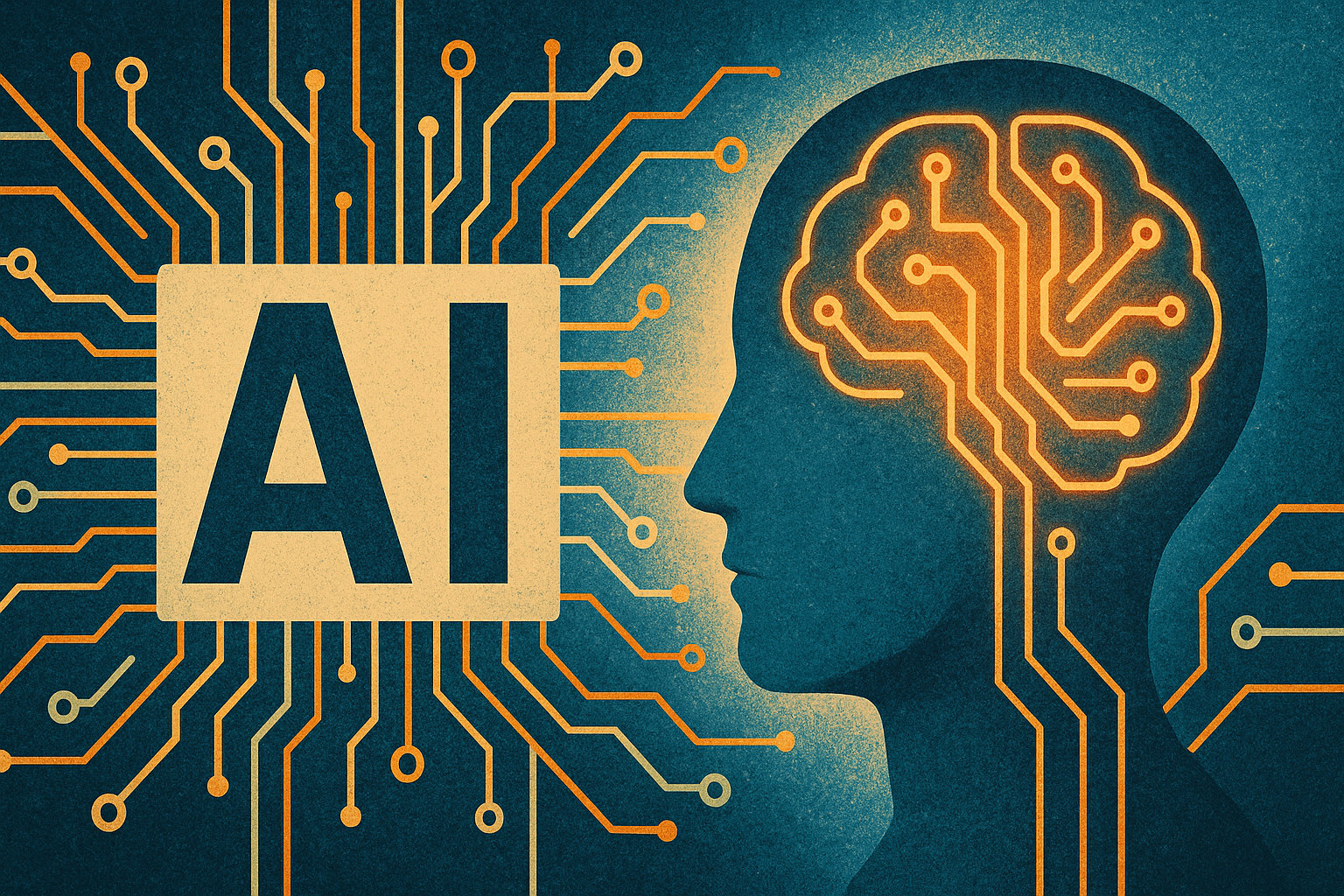
The tool stack has never been deeper. Sales teams now have AI that can analyze buyer behavior, generate pitch decks, write cold emails, and simulate discovery calls. And yet, across industries, win rates have not kept pace with the investment. That is not a technology problem. It is a communication problem.
The Tool Stack Has Never Been Deeper
We are living through a genuine transformation in how sales organizations operate. The scale of automation available to a modern sales team would have seemed like science fiction a decade ago. Predictive lead scoring tells reps which prospects are most likely to convert. Conversation intelligence surfaces the moments when deals drift off track. Generative AI drafts outreach sequences personalized to a buyer's specific industry and pain points.
None of that is wrong. In fact, it is powerful. The organizations that use AI thoughtfully will outpace those that do not. But there is a gap between what technology can optimize and what actually closes a deal. AI can help a rep get to the right conversation faster. It cannot make sure that conversation lands.
The truth every experienced sales leader eventually arrives at: in today's complex selling environment, AI may enhance the process, but it cannot replace the person. The question worth asking is not whether to use the tools. It is whether the human on the other side of those tools has the skills to convert the opportunity into trust.
Today's Buyers Don't Need More Information
Today's buyers enter sales conversations more prepared than any generation before them. By the time a prospect responds to an outreach email, they have read reviews, compared competitors, scoured LinkedIn, and often had a peer call about your product. They do not need your pitch deck to understand what you do.
What they need is harder to provide: a reason to trust you.
Trust is not a feature. It cannot be listed in a capabilities overview. It is built in the quality of the exchange, the questions a rep chooses to ask, the way a seller listens for what is not being said. Buyers are not evaluating products anymore. They are evaluating people. And they do not need another automated sequence. They need a reason to believe the person across the table is genuinely invested in helping them make a decision they can feel good about.
Two Forces Are Colliding in Every Sales Organization
Right now, most sales organizations are being pulled in two directions simultaneously.
On one side: pressure to do more with less. Sales cycles are under a microscope. Headcount is lean. Leaders are asking their teams to hit bigger numbers with fewer resources, which means every minute of a rep's time carries more weight, and anything that can be automated should be.
On the other side: buyers are demanding more authenticity. They have been on the receiving end of too many automated sequences, too many templated calls, too many conversations that feel scripted. They are not hostile to vendors. They are hostile to being sold to.
The tension between efficiency and authenticity is real. And it will not resolve itself by adding another tool. It resolves when sales leaders invest in the one thing automation cannot replace: the communication skills of the person in the conversation. Salespeople who can marry the precision of data with the nuance of human emotion will win. Those who can connect deeply while communicating clearly will stand out. Those who understand how people think, decide, and feel will become trusted advisors rather than vendors.
What AI Cannot Replicate
Technology can support a sales conversation. It cannot be in one.
A rep can have the best AI-generated brief in the room, but if they miss the moment when a buyer's tone shifts, if they barrel through a discovery call without registering the hesitation in a CFO's voice, the brief becomes irrelevant. The deal does not stall because of a data problem. It stalls because of a human one.
Three things fall outside what AI can do well. First, reading what is between the lines: the pause that tells a skilled seller this decision has already been made by someone not in the room. Second, applying the emotional intelligence to redirect: knowing when to stop building urgency and start building trust. Third, creating the kind of presence that makes a buyer say, after the call is over, that they want to work with you and not just your product.
These are not soft skills. They are the hardest skills in sales, because they require a level of attention and adaptability that no model can fully simulate. They are also the skills that separate the reps who build pipeline from the reps who close it.
Navigating the Complexity of Modern Buying
The buying environment has never been more complex. Multiple stakeholders. Stretched budgets. Long procurement timelines. Security reviews. Legal signoffs. Procurement processes that can outlast the original champion who sponsored the deal.
In this environment, sellers are not navigating a pipeline. They are navigating people. Each stakeholder brings a different set of concerns, a different definition of value, and a different emotional threshold for saying yes. A seller who can only deliver a polished demo has a narrow lane. A seller who can understand what each stakeholder needs to feel in order to move forward has a genuine competitive advantage.
This is where the neuroscience of buying becomes practically important. The part of the brain that makes decisions does not respond to data. It responds to stories. It responds to safety cues. It responds to whether the person across the table feels trustworthy, credible, and aligned with the buyer's own interests. When a seller understands that, they stop presenting and start connecting.
What the Most Successful Sellers Share
Across the work we do with enterprise sales teams, a consistent pattern emerges. The sellers who win, even in competitive markets with long cycles and multiple decision-makers, are not the ones with the most product knowledge. They are the ones who have mastered the art and science of connection.
They ask better questions. Not to qualify faster, but to understand more deeply. They tell stories that meet the buyer where they are, rather than stories that showcase the seller's own expertise. They are disciplined about listening. They create space in the conversation for the buyer to arrive at clarity, rather than pushing the buyer toward a conclusion the seller has already decided on.
That discipline is trainable. It is rooted in neuroscience, and it is the foundation of what we teach through NeuroSelling. The future is not AI or humans. It is AI and humans, and the sellers who learn to use both will be the ones who define what great selling looks like in this next chapter.
When Human Connection Is Missing, Deals Stall
The pattern is consistent across the clients we work with. A sales team can have the best tools, the best product, and the best pitch, and deals still stall.
When we diagnose why, the answer is rarely the product. It is almost always the conversation. A rep who rushes to solution before the buyer feels heard. A discovery call that checks boxes instead of building rapport. A presentation that focuses on features when the buyer needed to talk through their concern about organizational change.
Conversely, when reps learn to create trust early in the conversation, bring genuine empathy to the discovery process, and communicate with a level of intention that makes the buyer feel understood, something shifts. The buyer stops interrogating and starts collaborating. That rep becomes more than a salesperson. They become a guide. And a guide is not something that can be automated.
The Science Behind Trust-Based Selling
NeuroSelling is built on a foundational insight from neuroscience: the brain processes information and makes decisions in a sequence that is consistent and predictable. The part of the brain that drives purchase decisions is not the analytical cortex. It is the limbic system. It is emotional, social, and it decides, before the logical mind has a chance to weigh in, whether this person is safe to trust.
This is why the data does not close the deal. The relationship does.
A NeuroSelling-trained rep understands how to lead a conversation in a way that signals safety, builds trust, and earns the right to present solutions. They know how to tell a Prospect Story that speaks directly to what the buyer is experiencing, rather than what the seller wants to communicate. They know how to frame a recommendation so it lands in the part of the brain that actually decides.
The science is not abstract. It is immediately applicable. And when sales teams internalize it, the results show up in win rates, in deal velocity, and in the quality of the relationships they build along the way. We equip sales teams with neuroscience-based frameworks to connect with how buyers actually think and feel, lead conversations that build trust, create urgency, and drive action without manipulation or pressure, and integrate behavioral psychology with the power of storytelling and the structure of science.
Your People Are the Real Differentiator
The market will keep changing. Tools will get faster. AI will get better. Budgets will tighten and loosen. Buyer behaviors will evolve. But through all of it, one thing stays constant: people buy from people they trust.
The organizations that will lead in the next chapter of B2B sales are the ones that invest not just in automation, but in authenticity. Not just in enablement platforms, but in human potential. Not just in the tools that help their reps find the right conversation faster, but in the skills that help their reps have the right conversation when it counts.
The climate around us is shifting. Faster tools. Leaner teams. Tighter budgets. But the foundation of sales is still human. In fact, now more than ever, your people are the differentiator. In a world full of noise, the clearest signal is a human voice that understands what matters most.
If you want to explore what that looks like inside your sales organization, we are ready for that conversation.
