

There are moments when a topic arrives at exactly the right time. Recently, several of our clients independently asked about psychological safety and how it affects team performance, execution, and innovation. If you lead a team or coach leaders, this one deserves your full attention.
Why Psychological Safety Matters Now
The research behind psychological safety is over 20 years deep. Yet most organizations are only now treating it as a serious operational lever, not just a cultural buzzword. The timing matters: remote and hybrid work arrangements, accelerated leadership transitions, and heightened pressure on performance have all made the conditions for psychological safety far more fragile than they were a decade ago.
As leaders, we can no longer assume that a team performing well today is one that will continue to perform under pressure. The psychological architecture of the team, meaning the degree to which people feel safe to speak up, try new things, and challenge conventional thinking, determines whether that performance is durable or brittle.
The Research Foundation
Before sharing my own experience, I want to point you to two resources that are exceptional in both their empirical rigor and their practical application.
The first is The Fearless Organization by Amy C. Edmondson. Amy is a Professor of Leadership and Management at the Harvard Business School, recognized by the biannual Thinkers50 global ranking of management thinkers since 2011, and the author of more than 70 articles on the subject. Her definition is precise: "Psychological safety exists when people feel their workplace is an environment where they can speak up, offer ideas, and ask questions without fear of being punished or embarrassed."
The second is The Four Stages of Psychological Safety by Timothy R. Clark. Tim's framework provides a sequential model for understanding how psychological safety develops within a team: from inclusion safety, to learner safety, to contributor safety, and finally to challenger safety. Each stage builds on the one before it, and a single damaging interaction can erode progress across all four.
What Google Found About High-Performing Teams
Amy's work gained mainstream visibility through a 2016 New York Times article titled "What Google Learned From Its Quest to Build the Perfect Team." Google's internal research project, known as Project Aristotle, set out to determine what separated their highest-performing teams from the rest.
The finding was not what most expected. It wasn't raw talent, shared backgrounds, or even the nature of the work itself. The single most important factor in predicting team performance was psychological safety. Teams where members felt safe to take interpersonal risks consistently outperformed those where they did not, regardless of individual capability.
The implications for leaders are significant. You can have the most talented people in the room and still underperform if those people don't feel free to contribute fully. Psychological safety is not a soft metric. It is the precondition for everything else you're trying to accomplish.
From Free to Frozen: A Personal Account
Several years ago, I was in Chicago for a multi-day business meeting. By all accounts, it had been a success. I was a relatively new manager, the team had aligned on a clear path forward, and I was heading back to Cincinnati energized and ready to execute. I was, in Tim Clark's language, in the "free" state: inclusion was present, I felt like a valued contributor, and I had the confidence to challenge and be challenged.
Walking through O'Hare, I heard my name called twice over the terminal intercom. If you've ever been paged unexpectedly in a public place, you know exactly what happens in the body. Cortisol spikes. The mind starts running threat scenarios. I found a phone, returned the page, and was told to call my boss immediately.
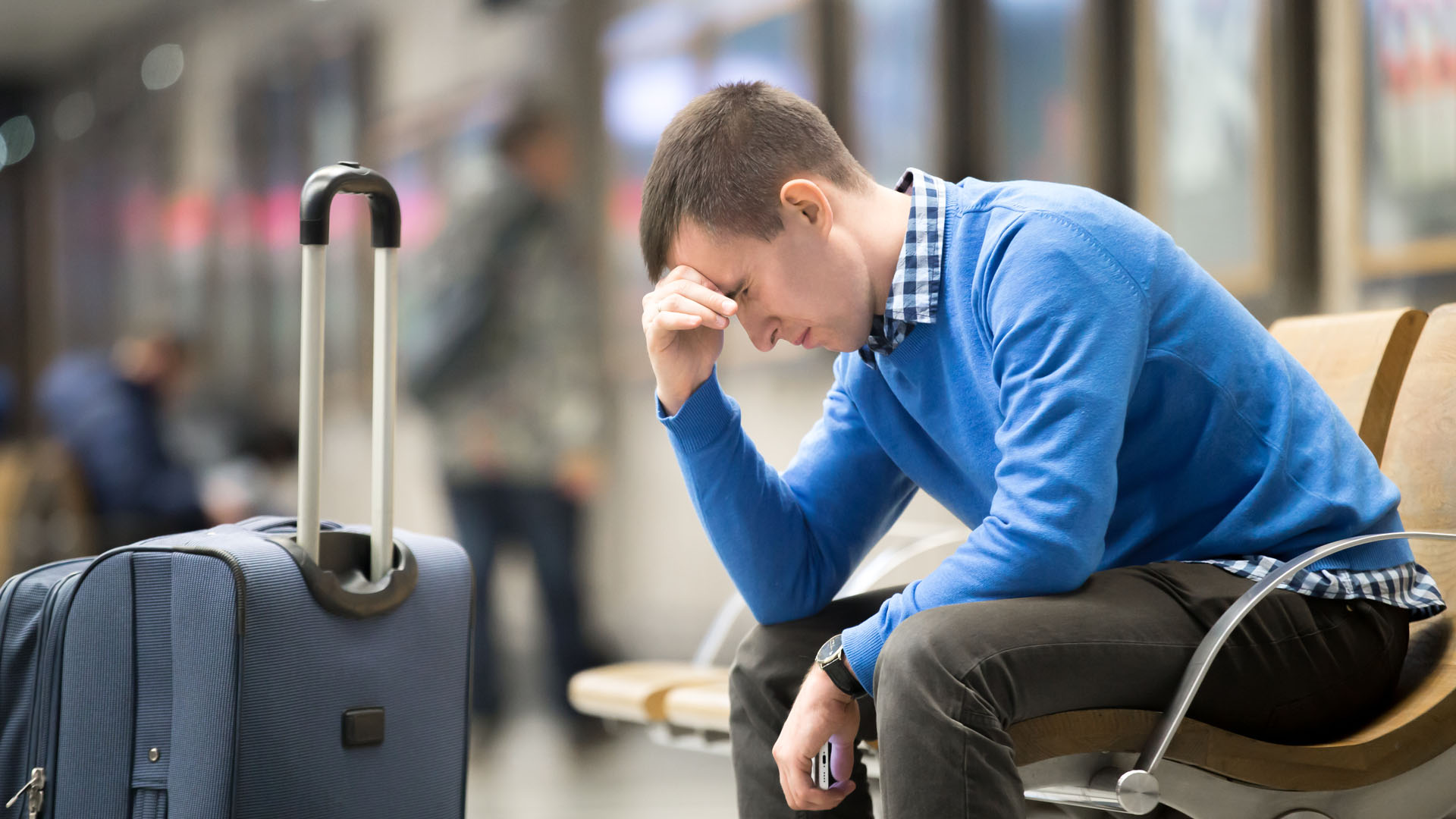
What followed was a stern verbal reprimand over an incident I hadn't anticipated. I boarded the plane with my head spinning. The questions that flooded my mind were not strategic or tactical. They were primal: Would I lose my job? How would this affect my team? Had I already damaged something I couldn't see? Was my performance going to slip?
In a single conversation, I went from free to frozen. The work didn't stop, but the way I engaged with it changed completely. I became more cautious, less willing to take the kinds of intelligent risks that had made the Chicago meeting productive. And I stayed that way longer than I expected.
The Four Stages of Psychological Safety
Reflecting on that experience through Tim Clark's framework gave me language for what had happened. Each of the four stages had been disrupted by a single interaction.
Inclusion safety is the foundation: the sense that you belong and are valued as a member of the group. When that phone call suggested my standing was at risk, inclusion safety took the first hit.
Learner safety is the freedom to ask questions, make mistakes, and experiment without fear of humiliation. After the call, I became guarded. I stopped raising uncertainties. I worked harder to appear certain even when I wasn't.
Contributor safety is the confidence to bring your full capabilities to the work. In the weeks following, I pulled back. I deferred more. I was present, but I wasn't fully contributing.
Challenger safety is the highest stage: the ability to question the status quo, push back on decisions, and surface ideas that might be unpopular. That went dormant entirely.
Here's what the research consistently shows: the four stages don't fall in isolation. When one is threatened, the others destabilize with it. And the recovery is rarely as fast as the damage.
The Neuroscience Behind the Frozen State
What I experienced in that O'Hare terminal was not weakness. It was biology. The human brain is wired to prioritize threat detection above almost everything else. When the limbic system perceives a threat, including a social threat like the risk of embarrassment, rejection, or status loss, it activates the same cortisol-driven stress response as a physical danger.
This is why a single difficult conversation can have an outsized impact on team behavior. The brain doesn't distinguish cleanly between "my boss is frustrated with me" and "I am in danger." Both trigger the same freeze-or-flee response. Rational thought becomes harder. Creative risk-taking becomes nearly impossible. The cognitive resources that make someone a great contributor get redirected toward self-protection.
For leaders, understanding this is not optional. You are operating in a neurochemical environment, not just an organizational one. The tone you set, the language you use, and the way you handle difficult conversations are constantly either building or eroding the psychological safety your team needs to perform.
Five Steps Leaders Can Take Right Now
The good news from my story is that the frozen state didn't last. The issue was resolved, the relationship was repaired, and the team went on to do strong work. But the experience left a permanent impression on how I think about my own influence as a leader and coach.
Here is what I recommend every leader consider doing, starting now:
- Read at least one of the two books mentioned above. Edmondson's The Fearless Organization gives you the research foundation. Clark's The Four Stages of Psychological Safety gives you the practical framework. Both are worth the investment.
- Assess psychological safety honestly within your team. There are validated survey instruments for this. Don't assume safety exists because people aren't complaining. Silence is often the loudest signal that it doesn't.
- Discuss the topic openly with your team. Naming psychological safety as something you're actively working to build sends a powerful signal. It gives your team permission to surface what they've been keeping quiet.
- Implement practices that move people from frozen to free. This includes the way you run meetings, how you respond to mistakes, and whether the loudest voice in the room consistently wins. Small, consistent behaviors matter more than grand gestures.
- Check in quarterly and stay humble. Psychological safety is not a destination. It's a condition that requires ongoing maintenance. Ask your team how they're experiencing it, and be prepared to hear feedback that's uncomfortable.
One Conversation Can Change Everything
This is the part of my O'Hare story that stays with me most. A single conversation, delivered with urgency and without context, moved me from free to frozen in a matter of minutes. The person on the other end of that call almost certainly didn't intend to do that. But intention doesn't determine impact.
As a leader or coach, you are the most powerful single variable in your team's psychological safety equation. Your words carry disproportionate weight, especially in moments of uncertainty or stress. The way you deliver difficult feedback, the way you respond when someone makes a mistake, and the way you show up in everyday interactions either expand or contract the psychological space your team has to operate in.
Conversations matter. And sometimes their impact runs deeper than you can see from where you're standing. The return on investment for getting this right isn't measured in quarters. It's measured in the long arc of what your team is capable of when they feel genuinely free to bring everything they have.
If you're thinking about how psychological safety shows up on your team or within the leaders you're developing, we'd be glad to talk through what that looks like in practice.
