

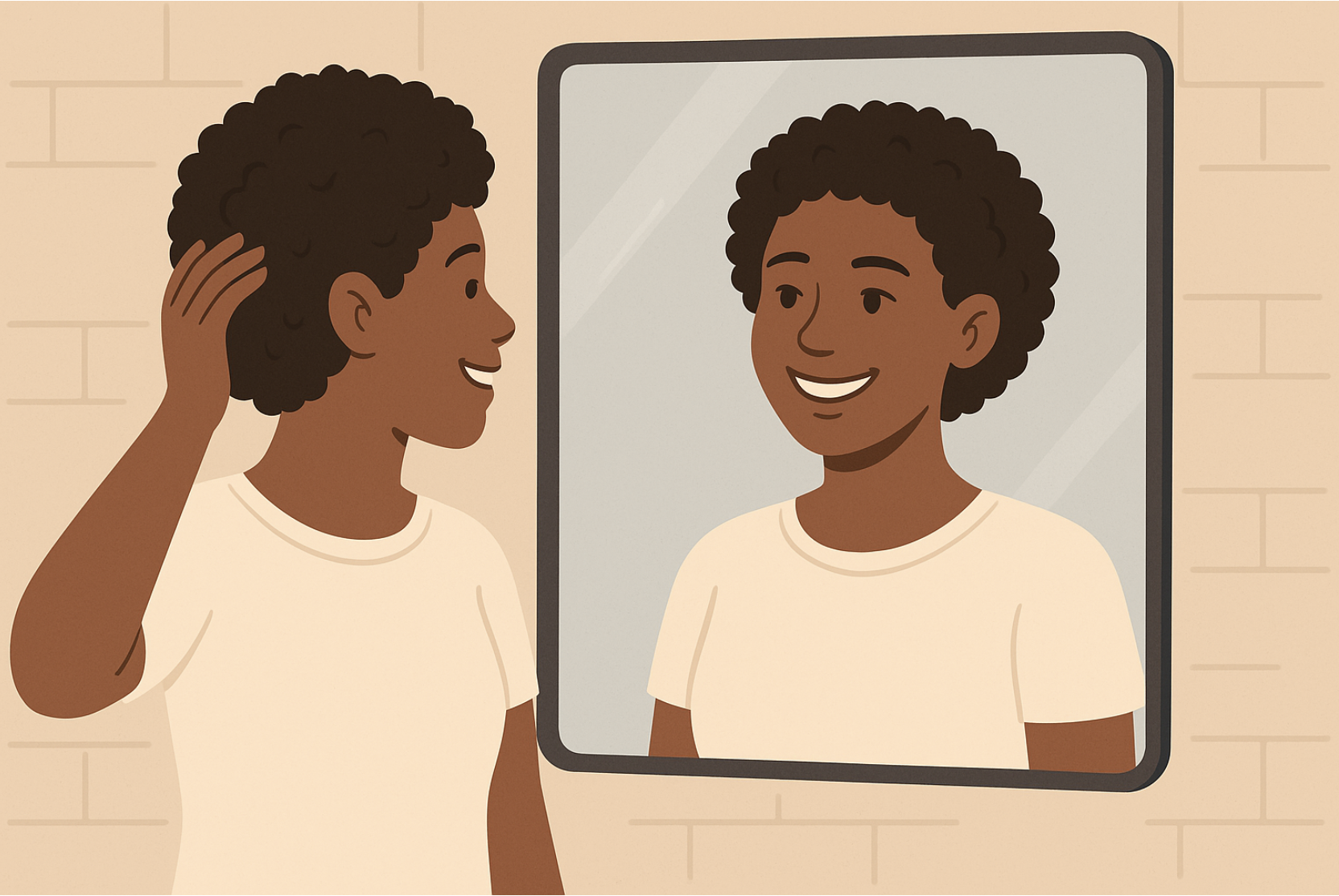
In coaching, breakthroughs rarely come from giving advice. They come from helping someone see themselves more clearly. That clarity, what neuroscience calls self-awareness, is the foundation for sustainable change.
The challenge is that most people aren't fighting a lack of skill; they're fighting the brain's tendency to protect the self-image. Effective coaching helps quiet that defense system so leaders can look in the mirror, not at the mask.
The Brain Behind Self-Awareness
Self-awareness lives primarily in two regions of the brain: the anterior cingulate cortex (ACC) and the insula. The ACC monitors conflict between our actions and our goals. The insula, often called the seat of self-consciousness, tracks internal sensations like emotion and intuition. Together, they allow us to evaluate our behavior and align it with our values.
When these regions are active, we experience insight, the "aha" moment that connects awareness to action. When they're suppressed, we fall into automatic behavior, repeating patterns that feel safe but unproductive.
NeuroCoaching uses this understanding to help clients activate the brain's reflective systems, creating space for honest observation without judgment.
The Mask: Why Awareness Feels Threatening
The human brain is wired to maintain consistency in identity. When feedback challenges that identity, the amygdala interprets it as a threat. Even gentle coaching can trigger the same neural response as physical danger. The body floods with cortisol, and the prefrontal cortex, the part of the brain responsible for reasoning and reflection, goes offline.
That's why self-awareness is so elusive. It requires vulnerability in a system built for protection.
A skilled coach recognizes this pattern. Instead of confronting the mask head-on, they help the client feel psychologically safe enough to remove it voluntarily. Safety activates the parasympathetic nervous system, calming the body and reopening the brain's higher-order thinking centers. Only then can awareness become transformation.
Coaching the Mirror
To coach the mirror is to help someone witness their own behavior with curiosity instead of criticism. The mirror doesn't distort or defend; it reflects.
Neuroscience shows that when we observe ourselves objectively, we recruit the default mode network (DMN), a system of brain regions that integrates past experiences with future goals. This integration enables empathy, planning, and moral reasoning. Coaching that activates the DMN helps clients connect what they feel with what they intend, bridging emotion and logic.
The coach's role is to guide this process gently. Questions like "What part of you shows up most in that moment?" or "What were you hoping would happen?" invite exploration without triggering shame. Over time, the client learns to pause their automatic response, notice their internal signals, and choose a different outcome.
Self-Awareness as a Feedback Loop
Awareness is not a one-time realization; it's a loop that strengthens with repetition. Each moment of recognition builds neuroplasticity, allowing the brain to rewire toward greater insight and self-control.
In NeuroCoaching, this loop looks like:
- Recognition. The client notices a behavior or emotion in real time.
- Reflection. They explore its origin and impact with curiosity.
- Recalibration. They make a conscious adjustment aligned with their values.
Every repetition strengthens the neural pathways of awareness, making reflective behavior more automatic than reactive behavior. Over time, this changes not just how someone performs, but how they think about performance.
The Science of Compassionate Awareness
True self-awareness also engages the ventromedial prefrontal cortex, the brain's empathy center. When clients learn to view themselves with compassion rather than judgment, the brain releases oxytocin, which counteracts stress hormones and promotes trust. This emotional shift sustains growth by reducing the fear of failure.
Coaches who model compassion create conditions for the brain to explore safely. The client begins to internalize that safety, extending empathy to themselves and, eventually, to others they lead.
Seeing Clearly to Lead Clearly
In a world that rewards confidence and speed, it takes courage to slow down and look inward. But neuroscience reminds us that awareness is not a soft skill; it is a biological advantage. Leaders who understand their own patterns regulate emotion more effectively, make clearer decisions, and inspire trust in those around them.
Coaching the mirror means helping people reconnect with the part of themselves capable of change. The mask protects, but the mirror transforms. And when awareness meets safety, growth becomes not just possible, but inevitable.
Worth a conversation? If your leadership team is ready to trade the mask for the mirror, start a conversation with us.
