

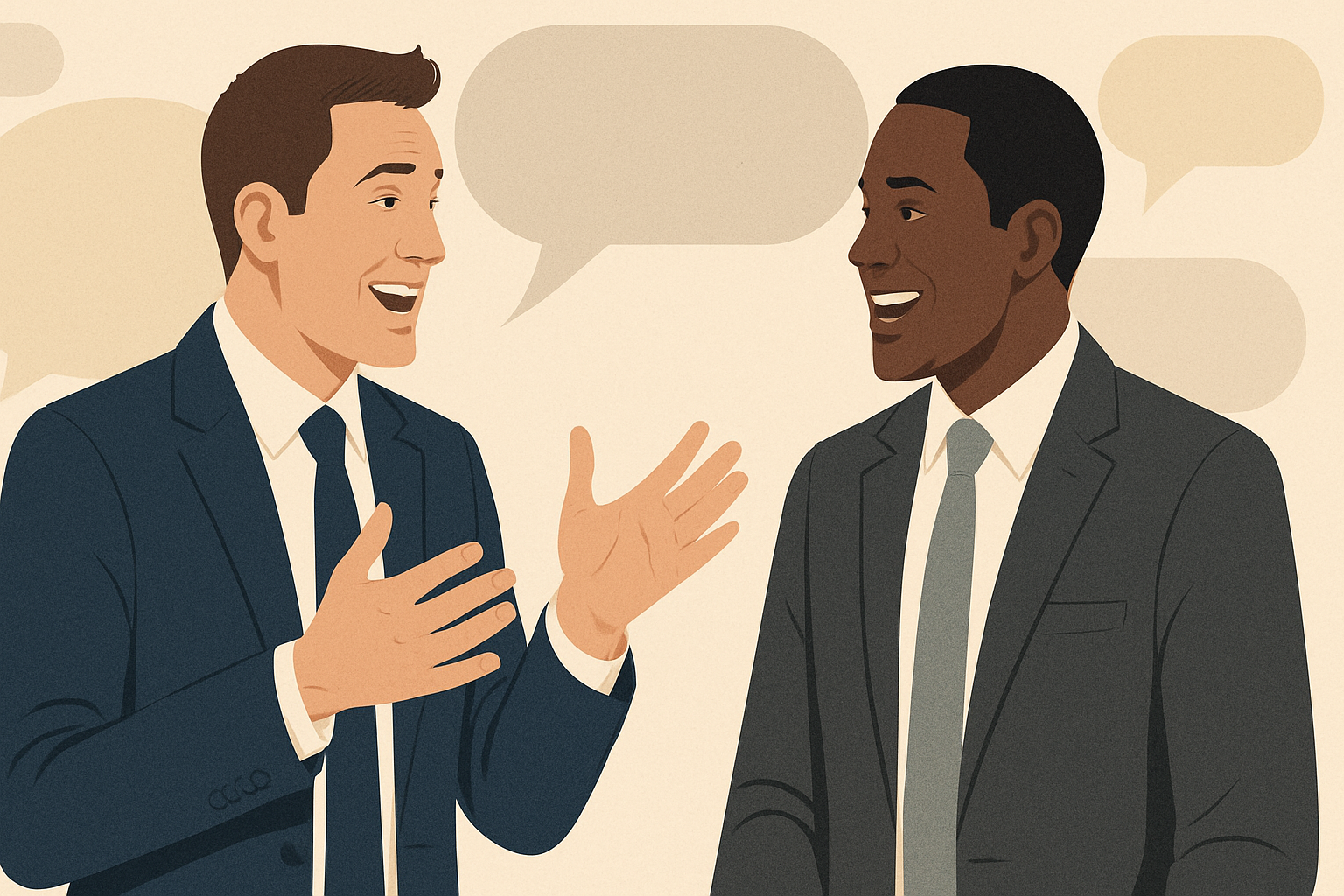
Sales isn't about convincing; it's about connecting. Yet despite decades of training and technology, many sales professionals still default to pitching products instead of telling stories. Our brains aren't wired to be persuaded by data alone. We're wired to feel before we think. That's why the most influential salespeople aren't just presenters. They're storytellers. And neuroscience explains exactly why.
Why the Brain Loves a Story
From an evolutionary perspective, storytelling is how humans have passed down knowledge, shared values, and built trust for millennia. Long before spreadsheets and slide decks, stories were the primary technology of persuasion. The human brain processes stories differently than facts. It doesn't just hear a story; it experiences one.
When we listen to a story, several regions of the brain activate simultaneously. The amygdala, which processes emotion, determines whether we care enough to keep listening. The hippocampus, which encodes memory, helps us retain what we hear long after the conversation ends. The prefrontal cortex, which drives decision-making, connects the narrative to meaning and action.
This multisensory activation creates what neuroscientists call neural coupling, a phenomenon in which the listener's brain begins to mirror the storyteller's neural patterns in real time. In other words, stories literally synchronize brains. That's why a great story can make a prospect lean forward, nod in recognition, or even finish your sentence before you do.
This isn't metaphor. It's measurable biology. Research on speaker-listener neural coupling demonstrates that the more engaged a listener becomes in a story, the more their brain activity aligns with the speaker's. Engagement isn't just emotional. It's neurological. And here's the sales implication: if your buyer's brain is synchronized with yours, their guard is down, their attention is up, and their decision-making is more open to new information. That's the neurological foundation for trust.
Data Doesn't Move People: Emotion Does
In sales, data validates decisions, but emotion drives them. Research consistently shows that people make purchasing decisions emotionally and justify them rationally afterward. When salespeople lead with slides full of statistics, feature comparisons, and product specs, they're speaking to the analytical brain. But when they lead with story, they engage the emotional brain, the part that actually decides.
This isn't a weakness in buyers. It's a feature of human cognition. The limbic system, which governs emotional processing, evolved long before the neocortex that handles rational analysis. Our emotional responses to stimuli are faster, stronger, and more persistent than our rational responses. A buyer who feels something about your solution will hold onto that feeling far longer than any statistic you put in front of them.
When salespeople understand this dynamic, they stop treating emotion as a soft variable and start treating it as a strategic asset. The story isn't a warm-up to the pitch. The story is the pitch. The data that follows is confirmation for a decision the buyer has already emotionally begun to make.
The Neurochemistry of a Great Story
Neuroscience confirms that emotional storytelling triggers the release of two key neurochemicals: dopamine and oxytocin. Understanding how each functions explains why story-based selling consistently outperforms data-driven approaches across every stage of the buying cycle.
Dopamine, often called the brain's reward chemical, increases focus and recall. When a story builds tension, moves toward a revelation, or delivers an unexpected insight, the brain releases dopamine in anticipation of the resolution. This keeps buyers locked into the narrative and makes your key messages significantly more memorable hours or days after the meeting ends. The meeting that moved a buyer emotionally is the one they replay in their heads when the committee meets to make the final call.
Oxytocin, sometimes called the trust molecule, deepens connection and empathy. When a story reflects a buyer's own experience, echoes their specific fears, or acknowledges the pressure they're under, oxytocin production increases. This is why a well-told customer success story that genuinely mirrors a buyer's situation can create a felt sense of connection that no product brochure or capabilities deck can replicate.
When buyers experience both dopamine and oxytocin during a sales conversation, they trust you more, remember your message better, and feel more confident making a decision. Their defenses lower, their curiosity rises, and their buying behavior becomes faster and more aligned with the value you've presented.
The NeuroSelling® Story Framework
At Braintrust, our NeuroSelling® methodology combines the science of communication with the art of storytelling. It's designed to help sales professionals move buyers not through pressure, but through purpose. The framework has four parts, each calibrated to activate a specific phase of the buyer's neurological response.
- The Context: Start with a relatable problem or situation. This activates the listener's empathy network and signals that this story might be directly relevant to them. The context should be specific enough to feel real and familiar enough to resonate. Generic situations produce generic empathy. The more precisely you describe a problem your buyer recognizes, the faster neural coupling begins.
- The Conflict: Introduce the tension or obstacle. The brain is wired to attend to contrast and unresolved tension. Conflict creates emotional energy and keeps the listener engaged. Without conflict, there is no story, only a sequence of events. The conflict is where you establish the cost of the status quo and invite the buyer to feel the weight of remaining where they are.
- The Turning Point: Describe the insight or discovery that changed the outcome. This is the dopamine moment. The brain anticipates the resolution and releases dopamine in response to the reveal. The turning point is where your approach, insight, or solution enters the story, not as a product feature, but as the catalyst for change. It's the moment the story pivots from problem to possibility.
- The Resolution: Show the transformation and connect it to the buyer's world. This is where the story closes the emotional loop. The buyer's brain begins to imagine what success could feel like for them specifically. That imaginative act, driven by the limbic system, is what converts narrative into motivation. The resolution isn't just an outcome. It's an invitation to see themselves in the story's conclusion.
The result is a story that doesn't just inform. It transforms the buyer's internal picture of what's possible and what's at stake.
Turning Stories Into Strategy
In high-stakes B2B environments, every conversation is a decision point. Whether you're engaging a physician, a procurement leader, or a biotech CEO, the principle holds constant: if you want them to act, they have to feel something first.
That's why NeuroSelling® teaches sales professionals to personalize their stories. When a story mirrors a buyer's specific values, fears, or aspirations, the limbic brain interprets it as personally relevant. Relevance creates resonance. And resonance creates movement. A story that could have been told to anyone produces the same result as a feature list: mild interest and no urgency.
Great sales stories don't describe the product. They describe the possibility the product creates. They paint a specific picture of what success looks like for this buyer, in this industry, facing this challenge, and what continued inaction costs if they don't move forward. The gap between where they are and where they could be is the emotional engine of the sale.
The most effective sales professionals maintain a library of stories. They know which narratives resonate with which buyer types, in which industries, at which stages of the buying cycle. They rehearse those stories until the delivery feels natural rather than scripted. And they invest in personalizing each story to the specific context of the person sitting across from them. This is not charisma. It is craft. It is a learnable, coachable skill.
Measuring the Impact of Storytelling
Storytelling in sales isn't just art. It's measurable science. Organizations that integrate story-based selling into their go-to-market approach consistently see meaningful performance shifts across the metrics that matter most.
- 23% faster sales cycles driven by increased emotional alignment earlier in the buying process, reducing the number of "thinking about it" stalls
- 30% higher retention of key messages by buyers, because dopamine-fueled narratives are significantly more memorable than feature-and-benefit presentations
- Up to 40% higher win rates when stories replace data-dump presentations in the critical stages of competitive deals
Just as importantly, organizations that invest in story-based selling see deeper customer relationships built on trust rather than transaction. Buyers who trusted the sales conversation buy again. They refer others. They become advocates because their experience of the sale felt like a partnership. The sale itself becomes a proof point for the relationship that follows.
The Future of Sales Is Human
In a world increasingly driven by automation, AI, and analytics, storytelling is the differentiator that technology can't replicate. Scripts can be automated. Features can be listed by an algorithm. Pricing can be optimized by a model. But a story that mirrors a specific buyer's situation, acknowledges their specific fear, and shows them a specific path forward, that requires a human being who listened carefully enough to know what story to tell.
Stories connect where scripts can't. They humanize your value proposition and make your message memorable long after the meeting ends. Because while products solve problems, stories solve perception. They help buyers see themselves in the solution before they've signed anything. They remove the cognitive distance between "this sounds interesting" and "this is exactly what we need."
The sales professionals who will outperform in the next decade aren't the ones with the best slides or the most automated workflows. They're the ones who understand how their buyers' brains actually work and who have the discipline to lead every conversation with a story that earns trust, creates resonance, and makes the decision feel inevitable.
At Braintrust, we teach the neuroscience behind how people buy, decide, and connect. Our NeuroSelling® programs help sales teams transform transactional pitches into conversations that build trust and drive measurable ROI. If your organization is ready to lead with science, start a conversation with our team.
