

For decades, sales training has focused on tactics: closing techniques, objection handling, and scripted messaging. It taught salespeople what to say, not how to make people feel. And in a world where buyers are more informed, more skeptical, and more emotionally overloaded than ever before, that gap is no longer a competitive disadvantage. It is the primary reason so many reps fail to convert.
The Problem With Traditional Sales Training
Conventional sales programs teach persuasion. The logic goes: share the right facts, benefits, and ROI statements, and your buyer will be convinced. Build the deck, nail the demo, hit all the talking points in the right order.
But that logic is broken, and neuroscience explains exactly why.
When salespeople lead with features and data, they engage the neocortex: the analytical part of the brain. The neocortex is excellent at processing information. It is not where decisions actually get made. Decisions originate in the limbic system, a much older and more primitive structure that operates below the level of language and logic. The limbic system does not care about your product's specifications. It cares about one question: do I feel safe here?
Until the answer to that question is yes, no amount of information will close the deal. The buyer's brain is still in evaluation mode, processing perceived threats, and the sale stalls. This is not a failure of effort. It is a mismatch between how reps were trained and how the human brain actually works.
How the Brain Actually Makes Decisions
To understand why neuroscience belongs in every sales training program, you need a working model of how people decide.
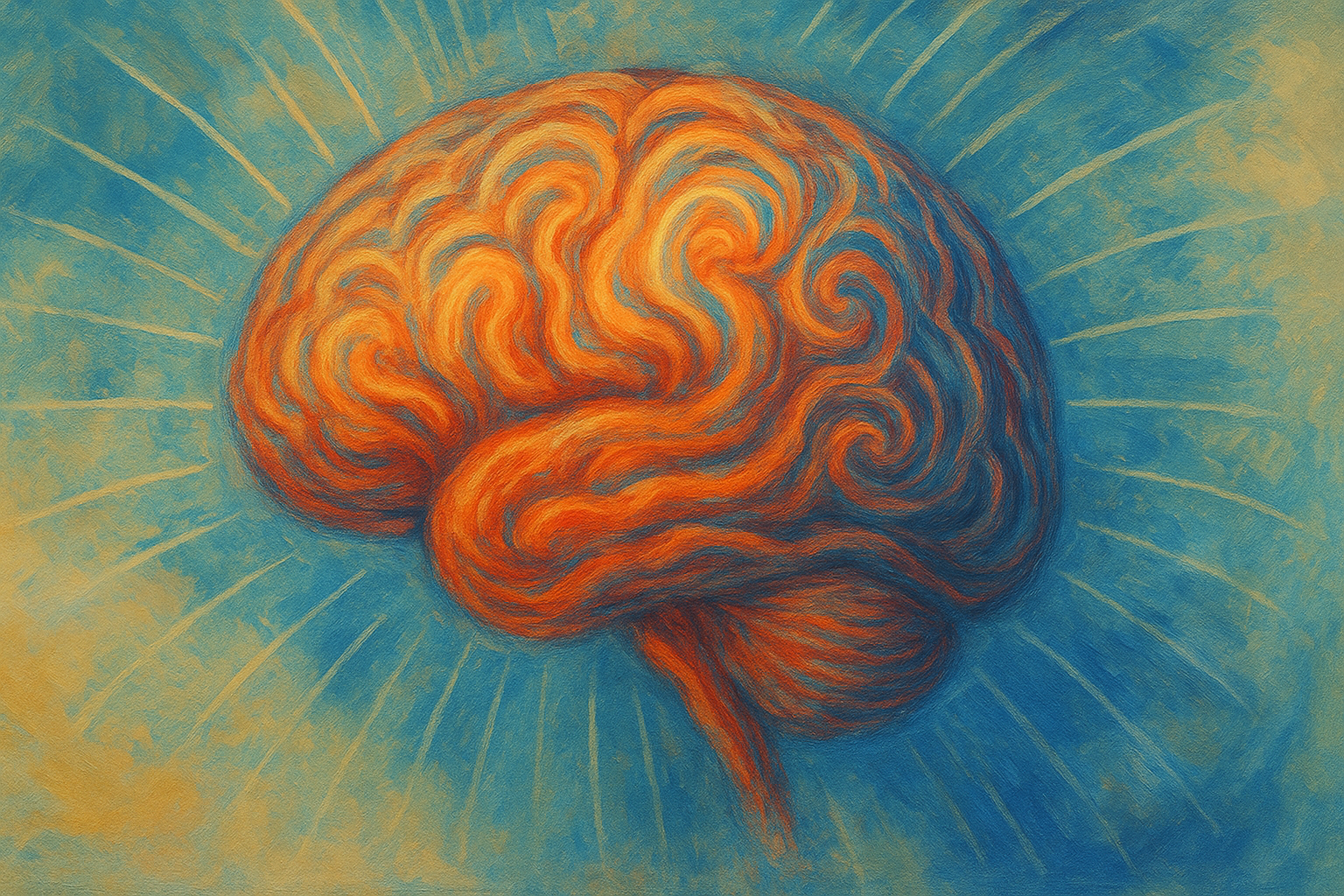
The brain processes incoming information through three interconnected systems. The brainstem handles basic survival filtering and attention. The limbic system manages emotion, memory, and trust. The neocortex handles language, analysis, and rational thinking. In buying situations, information flows through all three, but trust-based decisions originate in the limbic system, not the neocortex.
The limbic system evaluates people before it evaluates products. It is continuously asking: is this person credible? Does this person understand my situation? Am I being helped or sold to? These are not conscious questions. They happen fast, automatically, and they determine whether the buyer becomes open or closed to everything that follows.
Traditional sales training skips this stage entirely. It assumes a willing, receptive listener and tries to fill that person with information. What actually needs to happen first is different: the salesperson must earn limbic trust before the neocortex can do its analytical work.
The Cortisol Effect: When Pressure Backfires
The neurochemistry of a typical pressure-based sales interaction actively works against the rep.
When a buyer feels cornered, interrogated, or manipulated, the brain registers a threat and releases cortisol. Cortisol is the stress hormone, and it suppresses activity in the prefrontal cortex: the part of the brain responsible for logical reasoning and long-term thinking. A buyer flooded with cortisol cannot evaluate your value proposition clearly. They are not considering; they are escaping.
The opposite is equally true. When buyers feel genuinely understood and valued, the brain releases oxytocin: the neurochemical of trust and social connection. Oxytocin activates receptors in the prefrontal cortex, opens the buyer to new possibilities, and creates the psychological safety required for a real conversation about change.
This is the switch that most sales training programs miss entirely. Creating a cortisol environment closes buyers down. Creating an oxytocin environment opens them up. The salesperson's job is to build that environment first, and that requires a fundamentally different set of skills than reciting benefits.
Enter NeuroSelling
At Braintrust, we built NeuroSelling on a single foundational truth: sales is not about persuasion. It is about service. Not about getting someone to buy, but about helping them decide.
NeuroSelling integrates neuroscience, psychology, and storytelling to help sales professionals communicate in the order and language the brain is wired to receive information. It is not a script or a sequence of tactics. It is a system that moves buyers from a state of threat to a state of trust, and from confusion to clarity, by following the brain's natural preference for how it processes connection and change.
The framework gives reps a repeatable process for earning limbic trust before making any logical case for their solution. It helps them understand why buyers go cold mid-conversation, how to re-engage without pressure, and which communication habits consistently generate openness, collaboration, and forward movement through the pipeline.
Lead With Empathy, Not Expertise
The first principle of NeuroSelling is one the best reps already practice intuitively, though rarely consciously: lead with empathy before expertise.
Before a buyer cares what you know, they need to know you care about them specifically. This is not a soft sentiment. It is neurologically precise. Empathy activates the brain's mirror neuron system, which helps people feel understood and significantly reduces the amygdala's threat response. When a rep opens a conversation by demonstrating genuine curiosity about the buyer's world rather than launching into a pitch, the buyer's brain begins to relax. Defense mechanisms lower. Attention sharpens.
Sales training that skips this phase and moves immediately to product capabilities is training reps to lose the trust window before they ever know it existed. Empathy is not soft skill padding around the real conversation. It is the prerequisite for the real conversation to happen at all.
Tell Stories, Not Feature Lists
The second principle addresses how information gets delivered once trust is established. Features tell the brain what something does. Stories show the brain how life changes because of it.
Neuroscience research confirms that stories activate multiple brain regions simultaneously: sensory cortex, motor cortex, and the limbic areas associated with emotion and memory. A well-constructed story creates a full-body cognitive experience. The listener's brain begins to simulate the scenario being described, making the abstract concrete and the case for change felt rather than merely understood.
Data tells. Story sells. Not because stories are emotionally manipulative, but because they create meaning in a way that slide decks and bullet points never can. A customer success story, told well, triggers the same neural activity as a personal memory. That is why prospects remember a story from a sales call three weeks later and cannot recall a single feature from the same conversation.
Frame the Conversation in Their World
The third principle is about relevance. The brain has a built-in filtering mechanism called the reticular activating system, which determines what information deserves attention and what gets discarded. Its primary criterion for letting information through is self-relevance: does this matter to me, in my situation, right now?
When a rep connects their solution to a buyer's specific fears, values, and aspirations, the reticular activating system opens up. Attention increases. Retention improves. The buyer stops hearing a pitch and starts hearing a possibility that applies to their world.
This is why the best reps invest deeply in discovery before making any recommendation. They are not gathering data to build a more targeted pitch. They are earning the right to frame the conversation in terms the buyer's brain is already primed to care about. Self-relevance is not a nice-to-have; it is the access code to genuine attention.
Why This Matters Now More Than Ever
The modern buyer arrives at every sales conversation already informed. They have read the reviews, watched the demo videos, and compared alternatives before the first call. Information is no longer a differentiator. The rep who shows up with more data than the competition has not gained an edge.
What differentiates in that environment is how you make people feel when they engage with you. Do they feel heard? Do they feel understood in the specifics of their situation? Do they trust that your interest in helping them is genuine rather than transactional?
These are emotional and neurological questions, and they cannot be answered by a better deck or a sharper talk track. They require communication skills built on a real understanding of how the brain processes trust. Neuroscience turns that process from intuitive to intentional, replacing guesswork with a framework that works consistently across markets, industries, and buyer personas.
The ROI of a Rewired Sales Force
Organizations that implement neuroscience-based sales training see measurable, specific outcomes across their revenue teams.
Sales cycles shorten because trust builds faster. When reps stop trying to convince and start genuinely helping buyers navigate their own decisions, the buying process moves with less friction. Discovery becomes more open. Stakeholder alignment happens more naturally. Deals progress instead of stalling.
Message retention improves because the training itself is delivered through story and experience rather than slides and manuals. The techniques reps learn engage the same memory networks that NeuroSelling teaches them to activate in buyers. The methodology reinforces itself.
Cross-functional collaboration gets stronger because the same communication framework applies internally as well as externally. Teams that share a common model for building trust and communicating with clarity become more aligned and more effective across the board.
And performance becomes more sustainable. Reps trained in NeuroSelling are not relying on pressure tactics that wear down their confidence and alienate buyers over time. They are building real relationships, and real relationships compound. Retention improves, referrals increase, and the pipeline grows healthier without requiring heroics from individual contributors.
The Future of Sales Training Is Brain-Based
AI, automation, and analytics are rewriting how sales organizations operate. They are making certain tasks faster, certain data more accessible, and certain administrative burdens lighter. None of that changes what the human brain needs from another human before it will trust them enough to buy.
If anything, the proliferation of automation makes authentic human connection more scarce and therefore more valuable. The rep who can walk into a room and make the buyer feel genuinely understood in the first five minutes has an advantage that no technology can replicate. That skill is learnable, and neuroscience tells us exactly how to build it.
At its core, a sale is not a transaction. It is a transformation: a shift in how the buyer understands their situation, their options, and their confidence that change is possible. That transformation starts in the limbic brain, moves through the neocortex, and results in a decision the buyer owns. NeuroSelling gives reps the tools to facilitate that process consistently, at scale, and with integrity.
If your team is ready to move beyond scripted persuasion and into purposeful, brain-aligned communication, start a conversation with the Braintrust team to learn what NeuroSelling looks like in practice.
