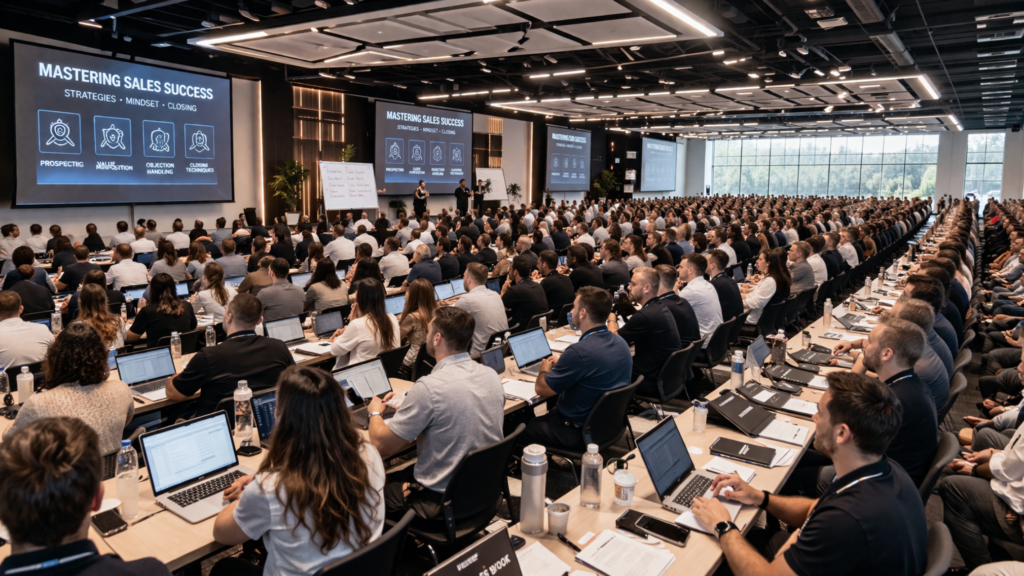
There’s a pattern that plays out in virtually every sales organization: top performers attend mandatory training, participate politely, and then go back to doing exactly what they were doing before. They ignore the methodology, skip the frameworks, and sell their own way—often while outperforming colleagues who diligently follow the training.
Most organizations interpret this as a compliance problem or an ego issue. The reality is more uncomfortable: top reps ignore training because they’ve learned, through experience, that most of it doesn’t actually help them win deals. They’ve developed intuitive selling approaches that work better than the generic frameworks they’re being taught. This isn’t arrogance—it’s rational adaptation. Understanding why your best reps resist training is the first step toward building development programs they might actually use.
The Compliance Fiction
Every sales organization has reps who are methodologically compliant and reps who aren’t. On the surface, it seems obvious that the compliant reps—the ones who follow the training, use the frameworks, fill out the templates—should outperform those who don’t.
But that’s often not what the data shows. Look at your own top performers. How many of them are religiously following the methodology you’ve trained? How many are doing something different—something that looks messier, less structured, but somehow more effective?
In most organizations, the honest answer is that top performers operate differently. They may use the language of the methodology in forecasting calls, but their actual selling behavior diverges significantly from what was taught.
This creates a credibility problem for training. Reps who follow the program notice that the people who don’t follow it are often more successful. The implicit message is clear: the training is something you do for compliance, not for performance.
Organizations typically respond to this by increasing pressure for methodology adoption, creating accountability systems, and making training completion a performance metric. But this addresses the symptom rather than the cause. The cause is that the training doesn’t actually help top performers do what they’re already doing well.
What Top Performers Know
Top sales performers have accumulated thousands of hours of buyer conversations. Through trial and error, feedback, and intuition, they’ve developed approaches that work in their specific context—their industry, their buyers, their product, their competitive landscape.
This accumulated wisdom is often tacit. Top performers can’t always articulate why they do what they do. They’ve internalized patterns that operate below conscious awareness. They know when to push and when to pull back, when to ask another question and when to move on, what tone to use with different personality types.
When these reps encounter generic sales training, they immediately recognize the gap between what’s being taught and what actually works in their world.
The methodology’s discovery framework might be fine in theory, but it doesn’t account for how their specific buyers think. The objection-handling techniques might sound good, but they miss the real dynamics of their competitive situations. The closing approaches might work somewhere, but not in the complex, consensus-driven deals they navigate.
Top performers aren’t ignoring training out of arrogance. They’re making a rational judgment that their hard-won expertise is more valuable than generic frameworks that weren’t developed for their specific challenges.
The Generic Training Problem
Most sales training is designed to be broadly applicable. Vendors need to sell the same methodology to thousands of companies across different industries, deal sizes, and buying processes. The economics demand generality.
This generality is the problem. The more broadly applicable a framework is, the less specifically useful it is to any particular selling situation.
A discovery framework designed to work for both transactional and enterprise sales is necessarily vague about the specific questions to ask in either context. An objection-handling approach meant for both technical and business buyers can’t provide the precise language needed for either audience.
Top performers recognize this immediately. They’ve spent years developing specific approaches for specific situations. Generic frameworks feel like a step backward—replacing nuanced expertise with one-size-fits-all templates.
The cruel irony is that generic training is often most useful for underperformers who haven’t yet developed their own approaches. But it’s least useful for top performers who have—and whose practices would be worth studying and systematizing rather than replacing.
The Expertise Paradox
There’s a well-documented phenomenon in cognitive science called the “expert blind spot.” Experts in a domain often struggle to remember what it was like to not have their expertise. They can’t easily break down their intuitive knowledge into the step-by-step instructions a novice would need.
This creates a paradox for sales training. The people who design methodologies are often experts whose selling days are years behind them. They’ve codified their expertise into frameworks, but something has been lost in translation.
What’s been lost is the contextual, intuitive, hard-to-articulate knowledge that makes expertise actually work. The frameworks capture the visible techniques but miss the invisible judgment about when and how to apply them.
Top performers sense this incompleteness. The training tells them what to do but not the nuanced when and how that makes techniques effective. Following the methodology literally leads to mechanical selling that doesn’t adapt to what’s actually happening in the conversation.
So top performers adapt on their own, developing the contextual judgment the training lacks. Their “ignoring” of the methodology is actually them filling in what the methodology leaves out.
The Pressure Reality
Sales training typically happens in low-pressure environments. Reps practice with colleagues who want them to succeed. Facilitators provide supportive feedback. There’s no quota on the line, no deal at risk, no career consequences for poor performance.
But real selling happens under intense pressure. Deals matter. Quarters matter. Careers are built or derailed by performance. The stress response is real, and it fundamentally changes how people think and behave.
Top performers have learned to sell effectively under this pressure. They’ve developed techniques that work not just in calm practice but in the heat of real conversations with real stakes.
Training that ignores pressure dynamics produces skills that collapse when stress rises. Top performers have experienced this collapse—they know that what works in the training room often fails in the field. Their skepticism about training isn’t theoretical; it’s based on repeated experience of training techniques failing when they were needed most.
What top performers want—and rarely get—is development that helps them perform better under the specific pressure conditions they actually face. Generic practice in supportive environments doesn’t deliver that.
The Time Tax
Top performers guard their selling time fiercely. They know that more time with buyers means more opportunities to close deals. Anything that takes them away from selling needs to justify its existence by making remaining selling time more productive.
Most training fails this test. Days spent in workshops, hours spent in e-learning modules, time spent on certification tests—all of it competes with selling time. If the training doesn’t make reps significantly more effective, it’s a net negative to performance.
Top performers have done this calculation repeatedly. They’ve attended trainings that promised transformation and delivered platitudes. They’ve spent days away from pipeline-building activities and returned with nothing that actually changed how they sold.
After enough of these experiences, skepticism becomes the default. The burden of proof shifts to the training to demonstrate value, and most training can’t meet that burden.
When top performers “ignore” training, they’re often making a rational time allocation decision. The expected value of applying their proven approaches outweighs the expected value of trying unproven techniques from the latest workshop.
The Culture Conflict
In many organizations, there’s an unspoken conflict between the official methodology and the actual culture of how deals get done.
The training might teach consultative discovery, but the culture rewards aggressive closing. The methodology might emphasize long-term relationship building, but the comp plan incentivizes short-term volume. The framework might require thorough qualification, but management expects full pipelines regardless of deal quality.
Top performers are expert readers of organizational culture. They know which behaviors are actually rewarded, regardless of what’s officially taught. When methodology conflicts with culture, they follow the culture—because that’s what determines their success.
This isn’t cynicism; it’s survival. Reps who rigidly follow methodology in a culture that rewards different behavior often struggle. Reps who adapt to the real rules of the game—while paying lip service to the official methodology—often thrive.
Training that ignores these cultural realities sets reps up for conflict. Top performers resolve the conflict by doing what works. The training becomes a ritual they endure rather than a resource they use.
What Top Performers Actually Want
If you asked your best reps what development they’d actually value, their answers would differ significantly from what most training provides.
They want peer learning—access to how other top performers handle specific situations they find challenging. Not generic best practices, but specific tactics from people who’ve solved the same problems they face.
They want advanced techniques—development that starts where they are, not where average performers are. They don’t need basic discovery training; they need nuanced approaches for the complex scenarios that still challenge them.
They want personalized feedback—specific coaching on their specific deals, from people who understand their specific context. Not generic role-play feedback, but insight into the actual conversations they’re having.
They want strategic input—perspective on how to approach their most important opportunities, from people with relevant expertise. Not methodology templates, but thought partnership on difficult situations.
They want efficiency—development that respects their time by being focused, relevant, and immediately applicable. Not day-long workshops on content they already know, but targeted interventions that address their real gaps.
Designing for Top Performer Adoption
Organizations that want top performers to engage with development need to design differently.
Start by studying what top performers actually do. Before teaching anything, understand the practices that make your best reps successful. Many organizations have never systematically documented this. They teach generic methodology while ignoring the indigenous expertise that already exists.
Make training optional and valuable. If top performers avoid training when given the choice, that’s diagnostic information about the training’s value. Design development that’s so clearly useful that top performers seek it out rather than avoiding it.
Create peer learning structures. Your top performers can learn from each other in ways they can’t learn from generic content. Facilitate exchange of expertise rather than imposing outside methodology.
Personalize based on performance level. A rep at 80% of quota needs different development than a rep at 150%. Don’t force top performers through content designed for average performers.
Prove value through pilot testing. Before rolling out training broadly, test it with top performers. If they find it valuable, adoption will be easy. If they don’t, that’s a signal to redesign.
Focus on their actual challenges. Ask top performers what situations they still find difficult. Design development specifically around those challenges. This respects their existing expertise while addressing genuine growth opportunities.
The Real Waste
The biggest waste in sales training isn’t the money spent on programs that don’t work for average performers. It’s the failure to learn from and systematize what top performers already do.
Every organization has reps who’ve figured out how to succeed in that specific environment. They’ve developed approaches through years of experimentation and refinement. This knowledge is organizationally valuable—far more valuable than generic methodology from an outside vendor.
When organizations ignore top performer practices and impose generic training, they’re not just wasting training dollars. They’re failing to capture and propagate their most valuable intellectual property.
The reps who “ignore” training are often the ones whose methods should be studied, codified, and taught to others. Their resistance isn’t the problem—it’s a signal that the organization is approaching development backward.
Your best reps aren’t ignoring training because they’re arrogant or undisciplined. They’re ignoring it because it doesn’t serve them. The question isn’t how to force compliance—it’s how to build training that’s actually worth following. Organizations that answer this question unlock both top performer engagement and, more importantly, the ability to systematize what top performers know into development that lifts everyone.