

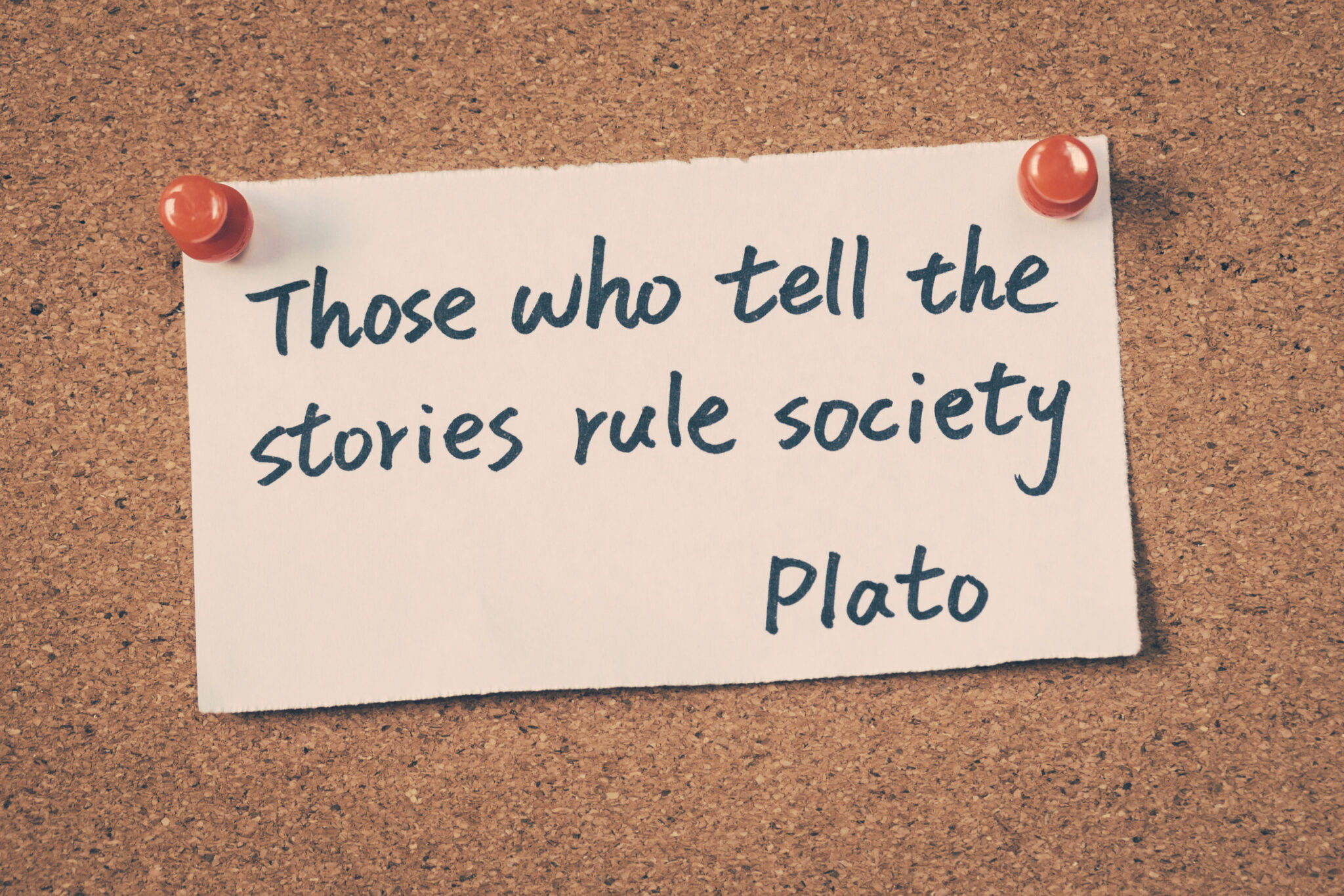
Most people can communicate good information. Fewer can communicate in a way that drives inspiration. And even fewer can move someone from inspiration to action. The difference between all three is the story.
A Story Too Many People Know
Once there was a business professional who was highly trained to communicate with product and solution expertise. Each day as she grabbed her briefcase and headed out for her daily adventures, she was filled with a sense of joy, hope, and optimism.
One particular day the sun was shining, her car was clean, her favorite radio station was dialed in, and she had an appointment that had been scheduled for months. As she pulled up to this all-important meeting, she took a deep breath, jumped out of the car, and went to the front door. As she went inside and sat down with her prospective customer, she began delivering her pitch. This wasn't any normal pitch: she unloaded all of the valuable information she had learned throughout her training. As she finished her self-perceived great presentation, she looked wide-eyed at her potential customer and expected him to say yes.
The client said, "Not now." As she left the office and got back in her car, the cycle continued on the next call, and the next. As she pulled back into her driveway at the end of the day, the joy and hope of the morning had turned into frustration and despair.
That is a difficult story. But as a coach, I have watched it play out many times across many industries and many roles. It is why we are so passionate about helping people communicate with more purpose, power, and impact through the art of storytelling.
This Isn't Just a Sales Problem
You don't have to be in sales for this story to resonate. Think about the hope and optimism you carry into a conversation with a peer, a direct report, or a family member. I've met very few people who don't want to be great storytellers, who don't want to build and influence relationships through how they communicate. Yet so many of us never actively practice this skill.
The reality is that the gap between "good communicator" and "great storyteller" isn't talent. It's intention and practice.
The Storytelling Cascade
In a recent Driving Change podcast, Jeff Bloomfield interviewed Esther Choy, author of Let the Story Do the Work, a business storytelling toolkit with templates, principles, and examples that anyone can put to use. Esther is also the host and executive producer for the Kellogg School of Management's podcast, Family IN Business, and her work appears regularly on Forbes.com.
Jeff and Esther opened the conversation with what she calls the storytelling cascade, the three levels of communicators that exist in any organization:
That cascade is the difference between a presentation that informs and a story that changes behavior. Most leaders operate at level one without realizing it. The goal of NeuroCoaching is to get leaders to level three consistently.
The IRS Framework
Esther introduced a framework she calls the IRS, which in her context stands for:
- Intriguing Beginning — open with something that earns attention before asking for it
- Riveting Middle — build tension, context, and stakes that make the resolution matter
- Satisfying Ending — resolve with clarity and a reason to act
Esther wrote the book for leaders who have been promoted into roles where they now must communicate, guide, coach, explain, defend, influence, and persuade. In her words: "You've been schooled in the 'just the facts' approach and are more comfortable with Microsoft Excel's ribbon than tying a ribbon to a birthday gift. Your career now hinges on your ability to tell stories."
That is one of the most honest descriptions of what happens to high-performing individual contributors when they step into leadership. The skills that got them promoted are not the skills that will make them effective in the new role. Storytelling is the bridge.
The Power of Ending with Hope
One of the most memorable things Esther shared in the conversation was the importance of ending every story with hope. She described hope as "motivation on steroids." When people leave a conversation, a presentation, or a coaching session with a genuine sense of what is possible, they act on it. When they leave with information alone, they file it away.
The concepts we teach through NeuroCoaching align closely with this. The brain is wired to move toward possibility and away from threat. A story that ends in hope activates the limbic system in ways that logic never can. That is not a soft idea: it is the neuroscience of how people make decisions and commit to change.
The Good News: You Can Learn This
Here is what I want every leader to hear: storytelling is a skill, not a gift. You were not born a great storyteller, and neither were the communicators you most admire. They learned it, practiced it, tested it, and refined it over time.
The path is straightforward. Actively listen to stories. Study the communicators who move you. Build your own story library, draw from real experiences, and be deliberate about structure. Then practice in low-stakes settings before you need the skill in high-stakes ones. Field test. Adjust. Practice more.
The goal of a story is to inspire action. That is true whether you are leading a team, coaching a direct report, closing a deal, or having a difficult conversation with a family member. The medium is the same. The stakes only change the urgency.
Back to Our Story
Our sales professional from the beginning of this piece worked at the art of storytelling. She studied great stories, built her own, tested them in real conversations, and kept refining. The result was not just better outcomes. It was something more fundamental: she served her customers more authentically, won more deals, and arrived home at the end of the day with the same hope she had started with.
That is what a great story can do for a leader. Not just close a room, but open one.
The concepts we teach at Braintrust align closely with the thinking of other leading voices in the communication space. Esther's work is one example of many that point to the same truth: the most effective leaders are almost always the best storytellers. If you are ready to close that gap, start a conversation with us.
