

Jason lit up when we talked about the team win. Not because it meant hitting quota. Not even because of the recognition he received from leadership. It was the look on his team's faces: the pride, the momentum, the belief that they could do it again.
"You know what's weird?" he said. "I didn't think I needed praise. But now I want to build on it."
That moment wasn't just motivational. It was neurological.
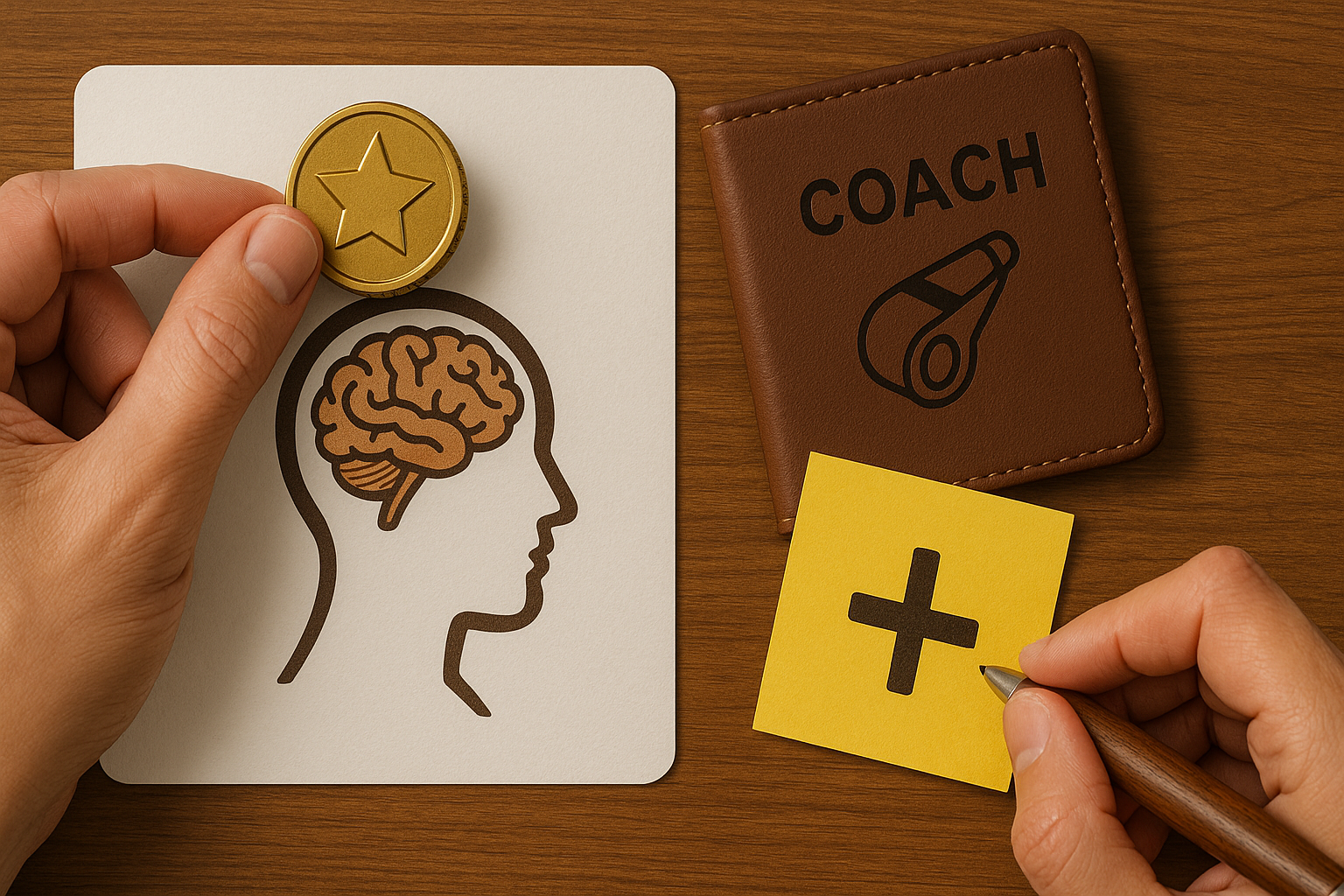
What Jason experienced was his brain's reward system at work. And as coaches, when we understand how that system functions, we can help clients sustain motivation, reinforce behavior change, and create coaching breakthroughs that stick. Not because of pressure or fear, but because of something far more powerful: positive reinforcement.
The Brain's Reward System: A Primer
At the center of our reward system is dopamine, the neurotransmitter that fuels motivation, learning, and pleasure. It's released when we experience something rewarding, whether that's praise, progress, or a moment of personal insight.
But here's the real magic: the brain doesn't just release dopamine after a reward. It also spikes in anticipation of one.
That means positive reinforcement in coaching isn't just about celebrating wins. It's about building an environment where wins are expected, noticed, and valued. In that environment, the brain wants to keep showing up, growing, and taking risks.
The Neuroscience of Positive Reinforcement
When a coach acknowledges effort, growth, or small wins, the client's brain links that moment to a positive outcome. Over time, this wiring leads to increased motivation to repeat the behavior, greater resilience through setbacks, faster learning and habit formation, and higher engagement and confidence.
This process is governed by three key brain regions:
- The ventral striatum, which evaluates reward and drives goal-directed behavior
- The prefrontal cortex, which tracks progress and sets future intentions
- The amygdala, which quiets down when reward is present, reducing fear and self-doubt
When coaching taps into these systems, the result isn't just action. It's sustained action.
Back to Jason: Why It Worked
Jason's shift didn't come from a performance lecture. It came from a moment of reinforced meaning. He connected the dots between his leadership behaviors and his team's motivation. As we celebrated the impact of his efforts, his brain experienced it as a win, activating the reward circuit and building momentum for future action.
The coaching lesson? Reinforcement creates repeatability.
Practical Ways to Apply Positive Reinforcement in Coaching
1. Catch the Micro-Wins
Don't wait for the big moment to celebrate. The brain responds even more strongly to consistent, small validations.
"You didn't just speak up in the meeting. You modeled courage. That's leadership."
Why it works: It reinforces identity-linked behaviors, not just tasks. When clients hear their growth named at the level of who they are becoming, not just what they did, it lands deeper.
2. Praise the Process, Not Just the Outcome
When clients hear praise for effort, learning, or self-awareness, they're more likely to take risks and persist through challenges.
"The way you stayed present in that tough conversation? That's huge growth."
Why it works: It encourages a growth mindset and builds neural connections around resilience. Praising the process tells the brain that the act of trying and learning is itself rewarding.
3. Anchor Positive Emotion to New Behavior
When clients try a new behavior, setting a boundary, leading differently, pause to mark it emotionally.
"Let's just take a second. What does that feel like in your body, having done that?"
Why it works: It links reward to action through the limbic system, making it more likely the behavior is repeated. The emotional anchor becomes the signal that tells the brain: this is worth doing again.
4. Visualize the Next Win
Build anticipation by painting the picture of future reinforcement. This taps into the brain's predictive dopamine release.
"What will it feel like when you do this again next week? What outcome are you most excited for?"
Why it works: It motivates the client through forward-focused reward circuitry. Dopamine doesn't wait for the event. It fires when the brain anticipates it, so the visualization itself becomes motivating.
Integrating Positive Reinforcement Without Overdoing It
Positive reinforcement must be specific to land with real impact. Here are the four qualities that separate intentional reinforcement from empty praise:
- Authentic: Praise what's real, not what you think they want to hear.
- Specific: General compliments don't register the same way as targeted feedback.
- Timely: Reinforce behavior as close to the moment as possible for maximum neural impact.
- Meaningful: Tie reinforcement to the client's values or goals.
Too much vague praise can dilute its power. But intentional, emotion-based reinforcement? That's what shapes behavior long term.
The Brain Repeats What It Enjoys
Change doesn't stick because someone knows what to do. It sticks because the brain enjoys doing it.
That's the power of coaching with the brain's reward system in mind. When clients feel seen in their growth, when their wins are celebrated, when effort is noticed, they want to do it again.
And that's not just good coaching. That's chemistry.
If you're building a coaching culture at your organization and want to see what NeuroCoaching looks like in practice, let's start a conversation.
