

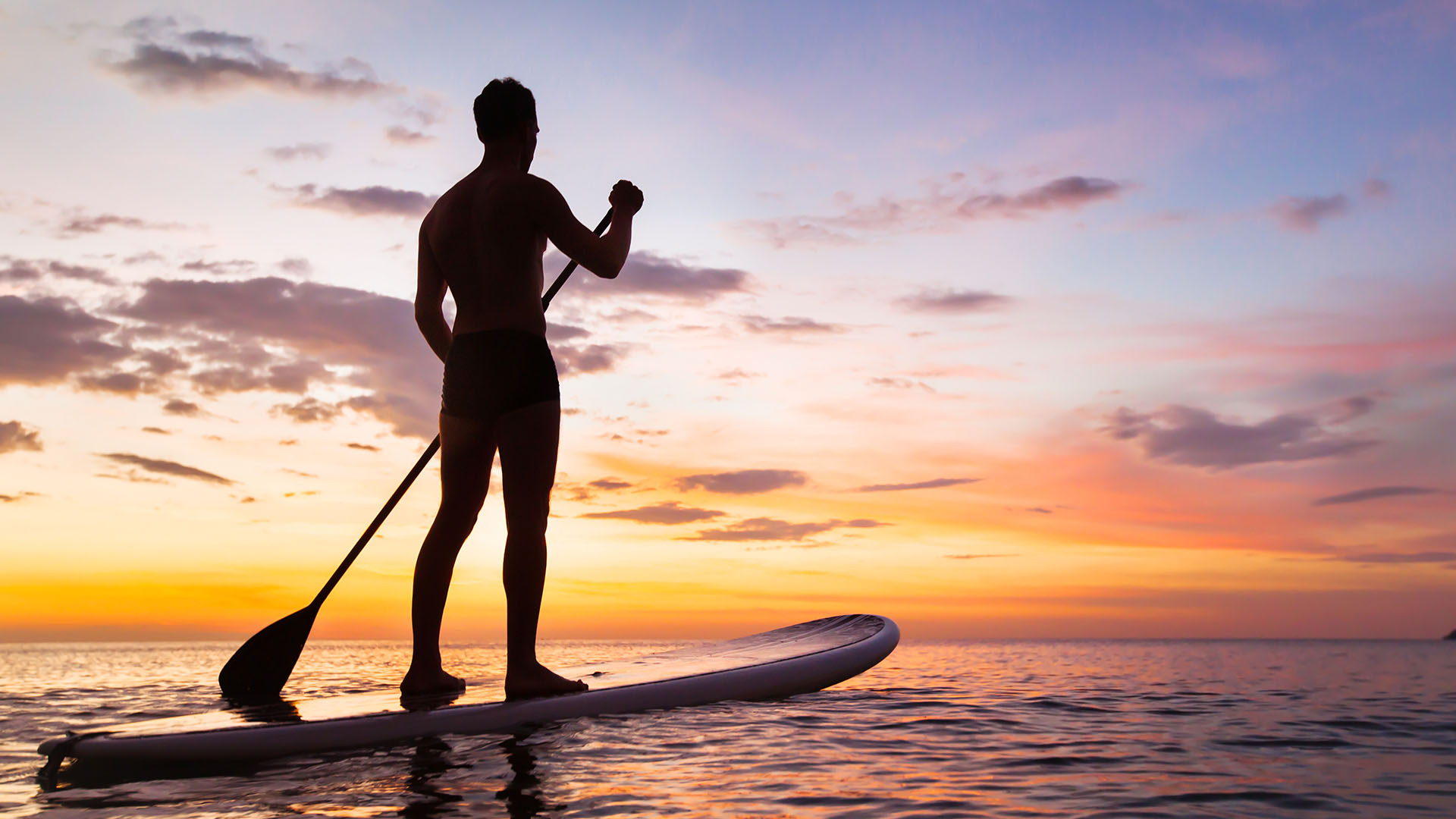
Stand-up paddleboarding will teach you things about yourself that no classroom ever will. A weekend at Lake Oconee recently reminded me that the same three challenges keeping you from staying upright on the water are the exact challenges keeping leaders from navigating what's ahead.
My wife and I had the opportunity to spend a few days at beautiful Lake Oconee in Central Georgia with dear friends from Cincinnati. If you have never been, I highly recommend it. Our weekend was filled with relaxation, laughs, great food, euchre, and outdoor activities. The weather was perfect, and the atmosphere couldn't have been better. As you head into your summer, I hope you find a place where you can take a deep breath, count your blessings, and be reminded that our country is beautiful.
When the Adventure Begins
As my friends know, I love the pure joy of being on the water, whether paddling a kayak or attempting to look calm on a Stand Up Paddle Board (SUP). My wife and I had the opportunity to SUP this weekend. As we walked across the dock, put our knees on the board, and pushed away from the edge, I was quickly reminded that the sport is called "stand up paddleboarding" and not "kneeboarding" or "stomach boarding." Maintaining your balance on a paddleboard is not easy. For those of you who practice yoga on a paddleboard, congratulations. You have my deepest respect.
Once we launched from the dock, the real adventure began. I found myself giving pointers to my wife as we attempted to maneuver around and through the waves being generated by ski boats, wave runners, and even pontoon boats. And in the spirit of full honesty, the advice I was giving to my wife was offered as I was taking a few face plants into the water myself. Continuous learning is a gift, or at least that is what I've been told.
The Three Challenges
As we were heading back in, I asked my wife what she felt were the three biggest challenges to stand-up paddleboarding. Her response was immediate and unequivocally clear: "standing up," "arm fatigue," and "looking down instead of ahead."
After my wife finished paddling, I went out for another 45 minutes to cross the channel and circle a beautiful island nearby. As I paddled, I thought about what she said and how those same three challenges show up in life and leadership.
Challenge One: Standing Up
The first and most obvious challenge of paddleboarding is simply getting upright. Most people spend their first few attempts kneeling, hesitating, or going straight back into the water. The technique that works: lay the paddle perpendicular to the board as you rise. Use it as a support tool, not an afterthought.
In life and leadership, the parallel is direct. When you get knocked down, use the resources around you to support your efforts. The instinct when you fall is to go it alone, to recover quietly, to act as if it didn't happen. The better move is to reach for what's available: your team, your network, your mentors, the frameworks you've built trust in. Standing back up isn't weakness. It's the whole point.
Challenge Two: Arm Fatigue
The second challenge is fatigue. Most people paddle almost exclusively with their arms, and their arms tire quickly. The solution is to engage your whole body: core, hips, legs, and feet share the load. Paddlers who last are the ones who stop treating it like an arm exercise.
In leadership, the lesson is the same. When you get tired, challenge yourself to draw on your mind, body, and spirit to channel energy. Relying on one source of fuel drains it fast. The leaders who sustain themselves over time have learned to pull from multiple reserves: the purpose behind the work, the people around them, the practices that restore them. Fatigue is information. It tells you where to redirect, not where to stop.
Challenge Three: Looking Down Instead of Ahead
The third challenge is the most consequential one. When you stare at the board beneath your feet, you lose your balance, you miss the waves coming toward you, and you drift off course. The fix is simple and counterintuitive: look up. Fix your eyes on the horizon.
When you spend most of your time looking down, you lose sight of where you're going. In leadership, this shows up as getting so consumed by immediate tasks, quarterly pressures, and daily noise that you stop raising your head to assess direction. The urgency of today drowns out the importance of what's next.
Pick Your Point on the Horizon
As I was heading back to the dock, I thought about the path I needed to take. So I picked a fixed spot on the horizon and made it my focal point. I stayed fixated on that location so I could read the waves coming at me, see oncoming boats, and take in the beauty of Lake Oconee. The additional benefit: the board stayed straight, and I didn't go off course.
That is what a clear vision does for a leader. It doesn't just tell you where you're going. It helps you read what's coming, course-correct in real time, and stay oriented when the water gets choppy.
Three Lessons for the Second Half
The parallels between paddleboarding and leadership are not accidental. Both require you to stay present, manage your energy wisely, and maintain a clear line of sight to where you're headed. The challenges are the same. So are the tips.
When life knocks you down, lean on your resources and get back up. When you're running on empty, draw on more than just willpower. And when you catch yourself staring at your feet, lift your eyes and find your horizon.
This summer, I hope you find a moment to raise your head and assess where you're going as you journey into the second half of the year. And when the wave of life knocks you down, get back up.
If you want to talk about what it looks like to build a leadership bench that stays oriented no matter how rough the water gets, start a conversation with our team at Braintrust.
